

Underwater Pelletizer
Why Choose Us
High Quality
Since it is founder, COLOWE has focused on quality and have stood out for the flexibility and attention given to every single need of each customer.
Customized services
During the design stage COLOWE study the best solutions for each customer's business, customising machines with each customer who choose COLOWE .
Professional Team
Our professional team collaborate and communicate effectively with one another, and are committed to delivering high-quality results. They are capable of handling complex challenges and projects that require their specialized expertise and experience.
Rich Experience
Our company has many years of production work experience. The concept of customer-oriented and win-win cooperation makes the company more mature and stronger.
What is Underwater Pelletizer
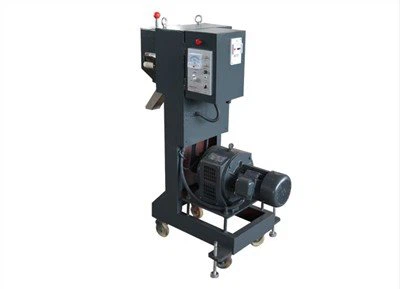
Underwater pelletizer is a unit that adds different additives to the resin according to different applications, and then heats, mixes and extrudes the resin raw material into granular products suitable for secondary processing. Its main function is to cut the molten plastic into uniform granules while it is still hot and sticky. This process is done underwater to quickly cool the pellets and prevent them from sticking together.

Advantages of Underwater Pelletizer
Environmental cleanliness
Closed circulating process water pipeline, the process of producing materials can be colorless and tasteless, protecting the materials, and there will be no secondary pollution to the materials. Because the equipment is well-equipped, no water leakage, the workshop is also easy to keep clean and tidy, relatively suitable for food-grade and special materials with high requirements for environmental protection granulation.
Intelligent pelletizing
Underwater pelletizing can be automatically adjusted according to the extrusion volume of the die head discharge, die hole diameter and pelletizing speed to change the size of the pellet, but also can be manually used in different number of blades of the knife frame to change the size and shape of the pellet.
Uniformity of granules
The plastic is cut by the cutter in the molten state, and the granules are solidified after cold cutting by circulating water, and are cut when they exit the mold. Pelleting in the melt state will not form any dust, and the shape of the pellet is regular and uniform.
High efficiency and low energy consumption
Pelletizing process realizes automated cutting, convenient operation, good quality granules, compared with the traditional pull-strip pelleting, with lower energy consumption and production costs and greater output production space advantages.
Composition Of The Underwater Pelletizer
Diverter
The diverter is used to confirm the polymer melt is well melted in the extruder or reactor, etc. The diverter will be switched to the discharge position, and the polymer melt will be discharged into a box under the diverter. Operator can check the polymer melt there. If the polymer melt is fully melted, then the operator will switch the diverter driven by the hydraulic station to the working position, and the polymer melt will go through the diverter to the under water die head for extrusion.
Underwater die head
The core part of the underwater pelletizer is the die head. COWELL has unique technology to design the die head according to different polymers and applications. The flow channel and hole is smoothly manufactured without dead corner. The special insulation technology guarantees the melt coming from the upstream can be properly heat-insulated here to make sure the melt could not be frozen at the die head, which blocks the die hole and affects the cutting. There are different ways to heat the die head, cartridge heaters, oil heating, and electromagnetic heating. The ways to chose the heating depend on the raw materials and the capacity.
Pelletizer
The pelletizer is to cut the materials coming from the die head. The pelletizer runs at high speed to cut them quickly in the water. The pellets/granules will go with the water flow. The knife contacts the die head face tightly driven by the compressed air or hydraulic station. Both ends of the knife is alloyed steel made which could be used to cut the polymer.
Tempered water system
The tempered water system gives the properly heated water to the die head chamber to make sure the polymers could be cut perfectly.
The heating temperature could be preset via the HMI. And with efficient heat exchanger, and filtering system, guarantees fluent cutting.
By-pass pipe
The by-pass pipe unit is also an important part of UWG. The diameter of the pipe decides the water flow rate that is need for the material and the capacity. With different circulation designs, the whole system could be operated perfectly.
Centrifuge dryer
The centrifuge dryer, as is known, main function is to separate the water from the pellets/granules. The system adopts European experience and technology, further more, we have upgraded the design, making it more suitable and stable during operation.
Smart controlling system
The whole system is controlled by PLC and HMI. With one key start/stop. Interlock with upstream equipment. Temperature, rotation speed, pressure, flow rate display, data storage, alarm analysis, one key reset, etc.
Typical Applications:
Masterbatches
Thermoplastics: TPE, TPR, TPV,etc
Hot melt: EVA, TPU, PA etc
Biodegradable materials: PLA, PBAT, etc.
Advantages Of Underwater Pelletizing System In Pelletizing Quality

External quality of underwater pelletizing system
Since the plastic is scraped off by the blade in the molten state and solidified by the circulating water cooling, the pellets under the melt do not form any dust, and the pellets are regular in shape and uniform in size. After being processed by the underwater pelletizing system, the pellets, packaging and transportation are more convenient. The traditional pelletizing method is that the polymer melt is extruded from the belt injection plate, cooled and cured in the water jet cooling tank, and then fed into the pelletizer for cutting. This traditional pelletizing method inevitably generates chips and dust. On the one hand, the granulation is not uniform, on the other hand, it will cause secondary pollution.
Intrinsic quality of underwater pelletizing system
After the molten plastic flows out from the mold hole, it is directly cut into granules and taken away by the cooling water in time. As long as the temperature and flow rate of the circulating water are controlled, the crystallinity of the granules can be controlled and the quality of the granules is very stable. After underwater pelletizing, the transparency and gloss of the pellets are higher, while the solid plastic pelletizing is processed with delayed cooling, resulting in higher plastic crystallinity, which affects the performance of the pellets.
In addition, since the granulation is carried out underwater, it can avoid the oxidation of the product in the air. There is another disadvantage, because the granulation is round particles, in the process of mixing color powder is prone to static electricity, resulting in color mixing, uneven color, the need to use dispersants to solve the problem.

Specifications Of Underwater Pelletizer
| Model | UW100 | UW300 | UW500 | UW1000 | UW1500 | UW2000 |
| Power | 1.5 | 4 | 5.5 | 11 | 15 | 18.5 |
| Speed(rpm) | 3000 | 3000 | 3000 | 3000 | 3000 | 3000 |
| No. of Holes(holes) | 2-6 | 12-18 | 18-36 | 42-72 | 60-100 | 72-120 |
| Hole Diameter(mm) | 0.5-3.2 | 0.5-3.2 | 0.5-3.2 | 0.5-3.2 | 0.5-3.2 | 0.5-3.2 |
| Heating Power(kw) | 2.4 | 3.6 | 4.8 | 5.4 | 7.2 | 7.2 |
Key Components Of An Underwater Pelletizing System
An underwater pelletizing system comprises several critical components, each playing a crucial role in the pelletization process.
Extruder
The extruder is the first stage of the process. It heats and melts the plastic materials, turning them into a molten state.
Die Plate
The die plate contains numerous small holes. The molten plastic is pushed through these holes, forming long strands of plastic extrudates.
Cutting Blade
As the extrudates emerge from the die plate, a rotating blade cuts them into small pellets.
Water Bath
The cut pellets are immediately submerged into a water bath. This step cools and solidifies the pellets and also cleans residue from their surfaces.
Dryer and Conveyor System
The cooled and cleaned pellets are then dried and conveyed to a collection bin for further use or packaging.
Control System
A comprehensive control system oversees the entire operation, allowing for adjustments in real-time and ensuring consistent quality and efficiency.
• Optimized die head flow channel design enables stable outlet & uniform spherical pellets.
• Unique heat insulation design to avoid melt frozen and block the hole, meanwhile can reduce the heat loss as well.
• Uniform temperature heating system.
• Automatically knife feed system.
• Customized design.
• HMI one key operation.
Applications Of Underwater Pelletizer In Masterbatch Production
Precision in pellet size and shape: The uniform pellet size and shape produced by underwater pelletizing technology ensure consistent color and properties when the masterbatch is used in the final plastic product.
High-quality production: The technology contributes to producing high-quality masterbatch that results in superior end-product performance.
Effective cooling: Underwater pelletizing allows for effective cooling of the pellets, which is essential for maintaining the physical properties of the masterbatch.
Continuous production: The continuous operation capacity of underwater pelletizing enhances the production efficiency of masterbatch.
Wide application range: Given its versatility, underwater pelletizing technology is applicable to a broad spectrum of materials, including color masterbatch, filler masterbatch, and additive masterbatch.
Understanding The Function Of Centrifugal Dryer In Underwater Pelletizer
The centrifugal dryer, another integral component of the underwater pelletizer, has the primary function of removing residual water from the surface of the pellets, which is a critical step post-pelletizing.
Efficient Drying
The dryer uses centrifugal force to effectively eliminate moisture, ensuring the pellets are completely dry before packaging or further processing.
Temperature Management
Besides drying, the centrifugal dryer also helps in managing the temperature of the pellets, cooling them down to a safe handling temperature.
Pellet Protection
The drying process is designed to be gentle to protect the integrity of the pellets, preserving their shape and quality.
Continuous Operation
Just like the pelletizer, the centrifugal dryer also operates continuously, aligning with the overall operational efficiency of the production process.
Water System And Its Significance In Underwater Pelletizing
The water system in an underwater pelletizing setup holds significant importance and serves multiple crucial functions.
Pellet Cooling
The primary role of the water system is to cool the freshly cut warm pellets. The rapid cooling solidifies the plastic, helping to maintain the shape and quality of the pellets.
Pellet Conveyance
The water system also acts as a medium to transport the pellets from the cutter to the centrifugal dryer. This ensures a smooth and continuous operation, vital for high-volume production lines.
Cutter Lubrication
The circulating water also lubricates the cutting process, reducing wear and tear on the cutter blades, and maintaining the precision and consistency of the cuts.
Tempering Heat
The water system absorbs the heat generated during the extrusion and cutting process, preventing overheating and potential damage to the machinery.
Operation of Underwater Granulation System
Startup sequence
Warm up: Turn on the power supply, set the temperature of the pelletizer die head and the start-up valve according to the process requirements, and set the temperature of each section of the extruder at the same time.
Connect and open the air source, and adjust the working air pressure range.
After the temperature reaches the set value, continue to keep it warm for 15~30 minutes.
Open the extruder to discharge when the startup valve is closed, check whether the discharge is qualified, and adjust the extrusion process to be qualified.
Turn the manual and automatic transfer button to the manual position, turn on the hydraulic pump, and then turn on the start valve discharge state to make the die mouth full, and then close the start valve to clean up the water chamber and die mouth materials.
After cleaning the die mouth, push up the pelletizer and lock the connection with clamp.
Turn the manual and automatic transfer button to the automatic position, and press the pelletizer ON button on the screen. Other devices of the underwater pelletizer will start automatically;
Adjust various process parameters on the touch screen to make the discharged products meet the expected requirements and enter normal production.
Shutdown sequence
LDPE washing machine for extruder, including washing underwater pelletizer, and closing the extruder after extruding.
When the pelletizer is shut down, the equipment will automatically interlock and shut down other systems.
Clean the residue on the die head and dredge all die holes.
Clean the interior of the centrifugal dehydrator.
Turn off the compressed air source.
Turn off the power supply of the control cabinet.
Site clearing.
How to Control Pellet Moisture with Underwater Pelletizer?


The impact of the cutting blade Cutting blade in the application process will occur wear, when the blade wear to a certain extent, cutting pellets will take some burrs, these burrs adsorbed water in the subsequent drying process is difficult to remove, resulting in high water content.
The influence of the filter When the material comes out from the mold, the instant pressure release swells up, and the water is easily wrapped in the material and vaporized to form a hole, and the water contained in the material cannot be discharged through subsequent drying. 3. The mold pressure is too small Too small mold pressure makes the material extruded from the mold less dense, and the water infiltrates into the granule during the granule transfer process, and the infiltrated water is difficult to be taken out in the dewatering process.
Mismatch of dewatering machine / spin dryer The mismatched dewatering machine will easily cause the dewatering distance to be too short and the pellet climbing distance to be shortened during the dewatering process, so that the water cannot be removed smoothly.
Low water tank temperature As we all know, the efficiency of hot water dewatering is relatively higher than that of cold water, and even if we use the cold strand cutting method, the most effective way to dewater is to blow hot air. That is why the water content of the pellets is high when the machine is just turned on, because when the machine is turned on, the water in the tank enters the circulation system is too low, the temperature has to be reduced, and then the heat brought out from the pelletizer by the pellets to raise the temperature.
Will someone say: You can first raise the temperature of the water tank, so that the problem will be solved. To be honest, the water tank is slow to heat up, and even slower to cool down, I have tried, our pelletizer water tank to reduce the temperature of 1 ℃ takes about 7 minutes or so. Of course, by feeding cold water into the tank to cool down fast, but sometimes it is impossible to feed cold water. The tank water temperature is too low not only affects the dewatering efficiency in the dewatering machine, and because the water temperature is too low, it will affect the mold temperature, which brings the result that the head pressure is too high.
Water tank temperature is too high The water tank temperature too low is not good, then the water tank temperature high is good? Real practice has proved that the water tank temperature too high is not good, too high-water tank temperature let the particle cooling speed lower, easy to form craters on the surface of the pellets, at the same time, too high water temperature will bring the expansion of the pellets, with the gradual cooling of the pellet contraction, the water remains in the material.
The water in the tank is not enough Too little water tank water, easy to lead to slow down the water circulation process, pellets in the water soaking time is extended, inevitably have water infiltration, resulting in high water content of granules.
Unstable feeding The unstable feeding will easily cause the difference of cutting sizes in big range, and the big size difference will cause the big pellets to have more water on the surface.
Our factory
Established in 2014,COLOWE is recognized one of China's poineer for twin screw extruder,banbury kneader compouding machine,two-stage screw compounding extruder,three screw compuding machine.since it is founder, COLOWE has focused on quality and have stood out for the flexibility and attention given to every single need of each customer.During the design stage COLOWE study the best solutions for each customer's business, customising machines with each customer who choose COLOWE .

FAQ
