

Plastic Extruder
Why Choose Us
High Quality
Since it is founder, COLOWE has focused on quality and have stood out for the flexibility and attention given to every single need of each customer.
Customized services
During the design stage COLOWE study the best solutions for each customer's business, customising machines with each customer who choose COLOWE .
Professional Team
Our professional team collaborate and communicate effectively with one another, and are committed to delivering high-quality results. They are capable of handling complex challenges and projects that require their specialized expertise and experience.
Rich Experience
Our company has many years of production work experience. The concept of customer-oriented and win-win cooperation makes the company more mature and stronger.
What is Twin Screw Extruder
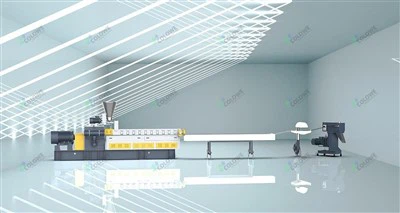
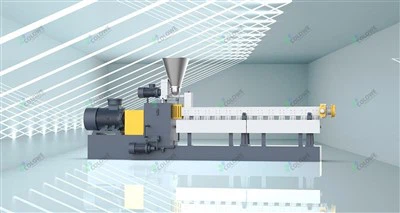
Twin screw extrusion machine is a widely used industrial process for producing a wide range of products from food, plastic, and chemical industries. The process is based on the principle of plasticization and homogenization of the raw material in the presence of heat and pressure. The twin screw extruder is a key component in this process as it plays a crucial role in determining the final product quality and efficiency. This article aims to provide an insight into the science behind twin screw extrusion and its applications in various industries.



Advantages of Twin Screw Extruder
Intuitively understand the wear and tear of wearing parts. Due to the convenient opening, the degree of wear of the screw elements and the inner liner of the barrel can be found at any time, so that effective maintenance or replacement can be carried out. It will not be discovered when there is a problem with the extruded product, causing unnecessary waste.
Reduce production costs. When manufacturing masterbatch, it is often necessary to change the color. If it is necessary to change the product, open the open processing area within a few minutes. In addition, the mixing process can be analyzed by observing the melt profile on the entire screw. At present, the common twin-screw extruder needs to use a large amount of cleaning material to clean the machine when changing the color, which is time-consuming, energy-consuming, and waste of raw materials. The split twin-screw extruder can solve this problem. When changing the color, it only takes a few minutes to quickly open the barrel for manual cleaning, so that no or less cleaning materials can be used, which saves costs.
Improve labor efficiency. During equipment maintenance, ordinary twin-screw extruders often have to remove the heating and cooling systems first, and then take out the screw as a whole. The split twin screw Is not needed. Just loosen a few bolts and turn the worm gear box handle device to lift the upper half of the twin screw barrel to open the entire barrel and then perform maintenance. This not only shortens maintenance time, but also reduces labor intensity.
High torque and high speed. At present, the development trend of twin-screw extruders in the world is toward high torque, high speed, and low energy consumption. The effect of high speed is high productivity. The split twin-screw extruder belongs to this category, and its speed can be up to 500 rpm. So it has unique advantages in processing high viscosity and heat sensitive materials.
A wide range of applications, suitable for the processing of a variety of materials; high output, high quality, and high efficiency can be achieved.

The twin screw extrusion machine consists of two parallel screws that rotate in opposite directions and are housed inside a barrel. The raw material is fed into the barrel through a hopper and is transported through the screws towards the end of the barrel. The screws are designed in such a way that they compress and heat the raw material to a specific temperature range, thus converting it into a homogeneous mixture. This mixture is then forced through a die and is cooled to form the desired product. The twin screw design provides a high degree of mixing and kneading action, which enhances the plasticization and homogenization of the raw material.
Applications of Twin Screw Extrusion Machine
Food Industry
The twin screw extrusion machine is used in the food industry for the production of breakfast cereals, pasta, snacks, and pet food. The high degree of mixing and kneading action provided by the machine helps in enhancing the texture and flavor of the final product.
Plastic Industry
The twin screw extrusion machine is used in the plastic industry for the production of pipes, sheets, profiles, and films. The machine provides the desired level of plasticization and homogenization of the raw material, which is essential for the production of high-quality plastic products.
Chemical Industry
The twin screw extrusion machine is used in the chemical industry for the production of polymers, resins, and additives. The machine helps in controlling the reaction kinetics and provides a high degree of homogenization, which enhances the final product quality.
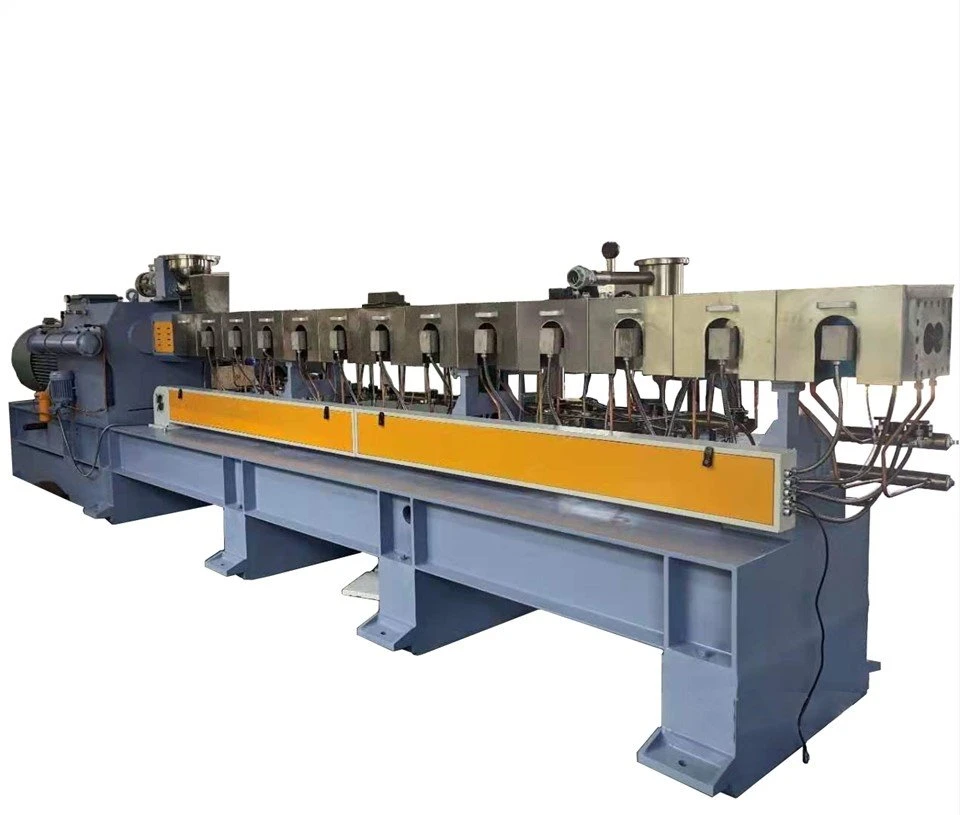
Twin Screw Extruders Features have two intermeshing, co-rotating screws mounted on splined shafts in a closed barrel. The screws are tight and self-wiping, which eliminates stagnant zones over the entire length of the process section. This results in high efficiency and perfect self-cleaning.
Sized to operate for small-scale runs in the lab to large-scale manufacturing.
B&P Littleford’s line of twin-screw machines also feature:
• Modular segmented barrel sections.
• Various sized screws for maximum flexibility.
• Specially adapted upstream equipment for feeding.
• Touch display process control system that regulates and monitor the mixing process in real time.
• Productive - 30% greater intake capacity over traditional extruders.
• Consistent performance.
• Easy to maintain and clean.
• Can use patented XLT (extra low temperature) discharge for enhanced pumping efficiency.

• Single screw is relatively simpler and cheaper. For some applications, a single screw is sufficient
• The twin screw is relatively efficient and energy-saving, and it is more excellent in blending and reactive extrusion
• The structure principle is different, the applicable material range is not the same
• Other than with a single screw extruder, the throughput rate can be chosen independently of screw speed
In general, the single screw extruder is developing in the direction of high speed, high efficiency and specialization. The twin-screw extruder has good feeding characteristics and is suitable for powder processing. It has better mixing, venting, reaction and self-cleaning functions than the single-screw extruder. When processing plastics and blends with poor thermal stability It also shows its superiority.
How to Choose the Right Twin Screw Extruder
The price range
Twin screw extruders of different specifications and models are suitable for different material processes, and the price range is naturally different. The price range of twin-screw extruders ranges from hundreds of thousands of domestically produced to tens of millions of imported mainframes, with a large span. Buyers need to purchase suitable twin screw extruders according to their own needs and capabilities.
Design processing accuracy
The design processing accuracy is a rigid index, which mainly depends on the parallelism of the screw shaft, which directly affects the processing quality of the material. The parallelism of the screw shaft determines the gap between the screw edge and the inner wall of the barrel and the gap between the meshing area, so it is very important; secondly, pay attention to the carburization depth of the inner wall of the barrel and the screw surface, which determines the length of service life; finally, the torque divider and gearbox do not need to be focused on, as long as they meet the general accuracy standards.
Meet the processing requirements
The best way to choose a twin-screw extruder is to confirm the configuration of the equipment according to the performance requirements of the material, such as: temperature zone, opening and closing method, aspect ratio, heating power, kneading block specifications, material wear resistance, permutation and combination. According to these requirements, select the twin-screw extruder that meets the conditions. In general, when raw materials are mixed and plasticized and then pelletized, the intermeshing co-rotating twin-screw extruder is often used.
What Do You Need to Check when Choosing a Twin Screw Extruder?
Check the feed height and mixing type of the twin screw extruder
High-quality processing must ensure the mixing and fluidization of the feeding process, and the height of the screw of this quality-guaranteed twin screw extruder also determines the subsequent mixing effect. Therefore, when selecting a high quality twin screw extruder, it is necessary to ensure that the height of the feeding machine is appropriate, and the mixing hopper of this kind of machine also needs to ensure that the feeding machine is effectively combined. Only the twin screw extruder with reliable quality guarantees a lower drop height of the feed from the machine, and ensures the hopper design can help to exhaust, can the twin screw extruder effectively increase the density of the feed and ensure its subsequent use is more stable and the quality meets the standard.
Check the control ability and material mixing effect of the twin screw extruder
A uniform extrusion molding method needs to rely on a good mixing effect. Nowadays, a twin screw extruder with good quality and excellent service must be able to mix at a constant pressure and a quantitative amount. Only by ensuring that the operation of the twin screw system is more stable can the production efficiency and quality be effectively improved. Therefore, when selecting a twin screw extruder with a reliable quality, users need to understand the combined effects of their screw elements to ensure that the blending modification production technology of this system is more stable.
Electricity Saving and Maintenance Methods for Twin Screw Extruders
The powder mechanical main motor of the twin screw extruder cannot start
Cause: Incorrect driving program. Problems with the main motor thread, whether the fuse wire is burned out.
Solution: Check the program and restart in the correct driving order. Check the main motor circuit. Check whether the lubrication oil pump is operating, and check the status of the interlock device related to the main motor. The inductor of the frequency converter has not been completely discharged, turn off the main power and wait for 5 minutes before starting again. Check whether the emergency button has been reset.
The main motor of the twin screw extruder makes abnormal noises
Cause: Damaged bearings of the powder mechanical main motor. A thyristor in the main motor controllable silicon rectifier circuit is damaged.
Solution: Replace the main motor bearings. Check the controllable silicon rectifier circuit and replace the controllable silicon element if necessary.
The main current of the twin screw extruder is unstable
Cause: Uneven feeding, damaged or poorly lubricated main motor bearings, a malfunctioning heater, no heating for a certain section, incorrect screw adjustment cushion or phase, and component interference.
Solution: Check the feeding machine and eliminate faults. Repair the main motor and replace the bearings if necessary. Check whether each heater is working normally, and replace the heater if necessary. Check the adjustment cushion, pull out the screw to check whether there is any interference of the screw.
The temperature rise of the main motor bearings of the twin screw extruder is too high
Cause: Poor lubrication of the bearings. Significant wear of the bearings.
Solution: Check and add lubricant. Check the motor bearings and replace if necessary.
The material output of the head of the twin screw extruder is not smooth or blocked
Cause: A certain section of the heater is not working, poor plasticizing of the material. The operating temperature setting is too low, or the molecular weight distribution of the plastic is wide and unstable. There may be foreign objects that are not easy to melt.
Solution: Check the powder mechanical heater and replace if necessary. Verify the set temperature of each section and, if necessary, consult with the process engineer to increase the temperature setting value. Clean and check the extrusion system and the head.
The starting current of the main motor of the twin screw extruder is too high
Cause: Insufficient heating time, large torque. A certain section of the twin screw extruder heater is not working.
Solution: Use a hand-drawn truck when starting. If it is not easy, prolong the heating time or check whether each heater is working normally.
If the gap between the barrel and screw of the dual-screw extruder is too large, and the flow rate of the extruded melt is unstable, transverse wrinkles are prone to appear on the surface of the product.
The gap is too large, and the pressure of the extruded melt is unstable, so that the geometrical size error of the product section changes greatly.
If the gap is too large, the reflux phenomenon will increase when the molten material moves forward in the barrel, so that the molten material stays in the barrel for too long and turns yellow, which will cause discoloration or focal spots on the surface of the product.
The gap between the barrel and screw of the dual-screw extruder is too large, which makes the output of extruded products unstable or decreased.
The heating temperature control is unstable, which makes the plasticization quality of the raw materials in the barrel uneven, resulting in rough surface of the product and frequent water marks.
The cross-sectional size of the product is unstable, and the geometrical size error fluctuates relatively large.

The forming theory of co-rotating parallel twin screw extruder
When the screws of co-rotating parallel twin screw extruder rotate in the same direction, the teeth of one screw extend into the groove of the other screw like a wedge, and the material cannot continue to enter the adjacent groove from the groove, but can only be forced to flow from the saw groove of one screw to the groove of the other screw.
In this way, the material is repeatedly forced to turn between the two screws, and it is subjected to good shearing and mixing. If the screw rotates in the reverse direction, the material must pass through the jaws, and the material seems to pass through the mixing gap of two wheels, so the shearing effect will be better.
Similar to the single-screw extrusion process, the twin screw extruder process can also be divided into three stages: feeding and solid conveying, melting and melt conveying. But the twin screw extruder working principle is completely different from single screw extruder. On one hand, the twin screw extruder is forward conveying, forcibly pushing the material forward. On the other hand, the twin screw extruder produces a strong shearing effect on the material at the meshing point of the two screws, which increases the mixing and plasticizing effect of the material.
What are the components of the co-rotating parallel twin screw extruder?
No matter what kind of co-rotating parallel twin screw extruder, the equipment is basically the same. When producing products, the raw materials are usually processed by the extruder barrel and screw. Therefore, the barrel screw of the twin screw extruder belongs to the processing part of the extruder.
After the product is processed by the screw barrel, it is extruded into the shape of the product we need at the die of the twin screw extruder, so the die of the extruder is also a part of the extruder.
Before the product is processed, we need to raise the temperature of the screw barrel, and we need to control the temperature of the equipment within a certain range during the production process.
There are many types of products that the twin screw extruder can produce, such as rubber sealing strips, rubber tubes, rubber sealing strips, rubber wires and other products. Different types of rubber products require different equipment configurations during production. We need to select the appropriate model and the appropriate type of extruder according to the equipment configuration used in the production of our products.
Therefore, the temperature control part is also part of the equipment, and the power part of the equipment is also provided by the twin screw extruder for product processing. The power part of the equipment drives the screw of the twin screw extruder to rotate to extrude the product. Another is that the transmission power part of the gearbox is also indispensable in the equipment.
Our factory
Established in 2014,COLOWE is recognized one of China's poineer for twin screw extruder,banbury kneader compouding machine,two-stage screw compounding extruder,three screw compuding machine.since it is founder, COLOWE has focused on quality and have stood out for the flexibility and attention given to every single need of each customer.During the design stage COLOWE study the best solutions for each customer's business, customising machines with each customer who choose COLOWE .

FAQ
