

Beyond Extrusion: Seven Key Techniques For Reshaping The Use Of Co Rotating Twin Screw Extruders
Introduction
In 2024, the global market size of twin screw extruders will reach 11.11 billion yuan, and it is expected to increase to 12.92 billion yuan by 2031. The latest research by BMW Group shows that the dry process technology using twin screw extrusion can increase the ion conductivity of solid-state batteries by 10 times compared to traditional processes. This breakthrough reveals a deep truth: the value of extruders lies not only in the equipment itself, but also in the user's deep understanding of the process.
Whether you are a technician trying to develop new materials or an international purchaser pursuing cost-effective production, mastering the operating philosophy of co rotating twin screw extruders will be the key to finding a balance between environmental protection and efficiency.
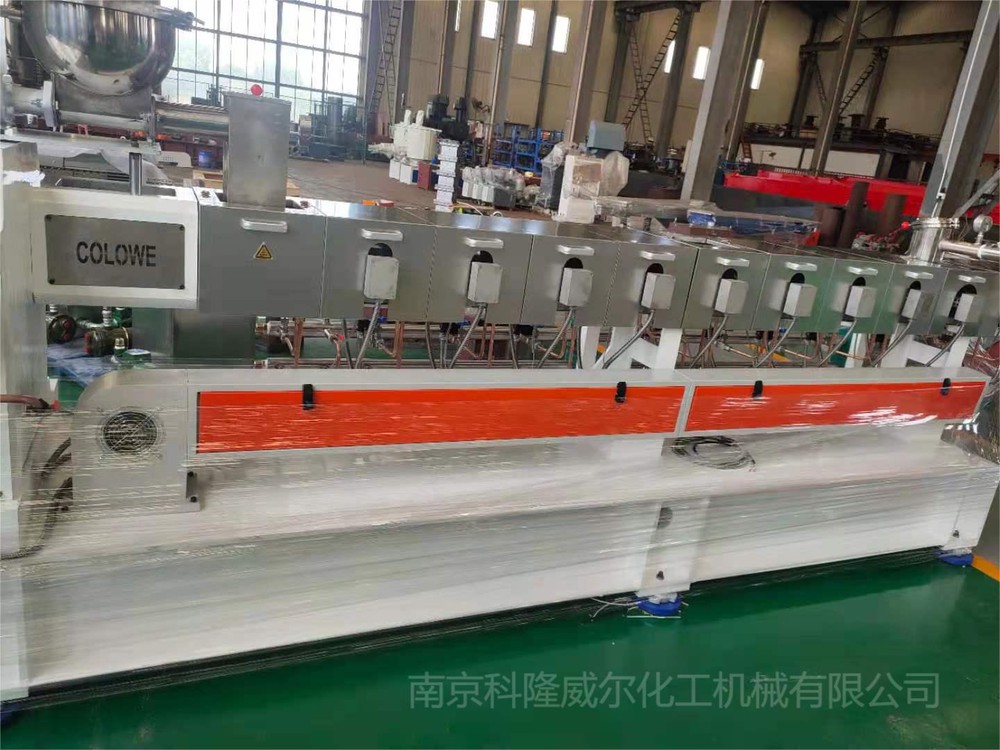
Why hasn't your co rotating twin screw extruder reached its full potential?
1. New challenges in extrusion technology under the background of globalization
1.1 Industry changes behind data
According to research conducted by Hengzhou Chengsi, the global revenue from twin screw extruders is expected to be approximately 11.11 billion yuan in 2024. Behind this set of data, there are three major structural changes hidden:
·The complexity of materials has surged: from traditional PP and PE to biodegradable materials, the range of material rheological properties has increased
·Environmental requirements upgrade: VOCs emission standards tighten, energy consumption becomes a core consideration in international procurement
·Increased proportion of recycled materials: Data from a production line of an Indian customer shows that the blending ratio of recycled PP crushed materials has reached 70%
1.2 Key issues raised
Have you encountered the following confusion:
·How to maintain melt stability when processing high proportion recycled materials with a co rotating twin screw extruder?
·Do we need to redesign the screw configuration when trying new biomaterials?
·How to balance energy consumption and quality while pursuing efficient extrusion?
2. Tip 1: Re recognize your screw - the infinite possibilities of modular design
The core advantage of co rotating twin screw extruders lies in their modular design. By adjusting the combination of threaded components, the same device can adapt to various materials ranging from low viscosity to high viscosity, from thermosensitive materials to high filling systems.
Data support: Experimental data from Guangzhou Putong shows that the twin screw granulator designed with a split barrel can reduce material change time by 60% and improve formula optimization efficiency by 50%.
Practical suggestions:
·Distinguish between conveying components and kneading block functions
·Pay attention to the rotation direction and lead of threaded components
·Record the optimal component combination for different materials
Q: How to determine if the current screw configuration is suitable for new material development?
A: Observe the fluctuation of melt pressure and production stability. If the pressure fluctuation exceeds ± 0.5MPa, or the actual production is 85% lower than the theoretical value, it is recommended to optimize from the misalignment angle of the kneading block, changing 90 ° to 45 ° or 30 ° can reduce the shear strength.
3. Tip 2: The Art of Temperature Control - Not Just Setting Values
The temperature control accuracy of twin screw extruders is usually ± 1 ℃, but the actual temperature of the melt may be 20-30 ℃ higher than the set value. BMW Group's research has confirmed that in the preparation of sulfide solid-state batteries, the ion conductivity reaches its optimal level at 100 ℃, while excessively high temperatures can lead to electrolyte decomposition.
Practical suggestions:
·Feeding area: prevent bridging, preheat in advance
·Mixing zone: Pay attention to the melt viscosity reflected by torque changes
·Exhaust zone: If the temperature is too low, it is prone to solidification, and if it is too high, low molecular weight compounds will decompose
Q: How to avoid bubbles when processing recycled materials with high moisture content?
A: The key lies in the multi-stage powerful release. Multiple vacuum exhaust chambers are designed in the main cylinder, combined with a high-power two-stage water ring vacuum pump, to control the exhaust section temperature at the lower limit of the material melting temperature.
4. Tip 3: Feeding Strategy - The Source of Stability
Uneven feeding is the most common "invisible killer" of twin screw extruders. Jiangsu Yuesheng found in the Indian project that PP crushed materials are prone to bridging in the feeding area, directly causing significant fluctuations in machine head pressure.
Practical suggestions:
·Multi component blending must use a weight loss feeding scale
·Establish a feed rate screw speed matching curve
·Liquid additives should be added after the material has melted
Q: How to determine the optimal feeding amount?
A: Observe the load of the main motor. Gradually increase the feeding amount to 85% -90% of the rated value, with a slight decrease of 5% as the long-term operating benchmark, which not only maximizes the production capacity advantage of the high-efficiency extruder, but also leaves room for adjustment.
5. Tip 4: Vacuum Exhaust - Invisible Quality Defense Line
For recycled materials and biobased materials, vacuum exhaust directly determines the mechanical properties and apparent quality of the final product. Twin screw extruders can be combined with multi-stage vacuum exhaust structures to complete various high volatilization operations.
Practical suggestions:
1. The exhaust port is located after the material is completely melted and before the pressure building zone
2. A 1500kg/h production line is equipped with a 15KW two-stage water ring vacuum pump
3. Install reverse threaded components in front of the exhaust port to form a melt seal
Q: How to deal with material leakage from the vacuum port?
A: Add reverse threaded components in front of the exhaust port; Reduce the temperature of the exhaust area appropriately; Adjust the vacuum degree to -0.06 to -0.08MPa.
6. Tip 5: Melt pump and screen changer - the final guarantee for stable pressure building
The twin screw extruder has excellent mixing performance, but limited pressure building capacity. Introducing a melt pump and closed-loop feedback system can significantly reduce discharge pulsation.
Data evidence: A 1500kg/h PP recycling and modification line uses a 1000CC displacement melt pump, which has a significant secondary pressure stabilization effect.
Practical suggestions:
·The inlet pressure of the melt pump is set to 2-4MPa, and the outlet pressure is set to 8-15MPa
·Interlocking control of melt pump speed and extruder screw speed
·When the pressure difference before and after the screen changer exceeds 5MPa, it prompts to replace the screen
Q: How to avoid pressure fluctuations in a double column screen changer?
A: Adopting a winding double column screen changer, preheat the new filter screen before replacing it, with an action of less than 1 second, and set the melt pump speed compensation at the moment of screen replacement in the control program.
7. Tip 6: Selection and Optimization of Granulation System
The granulation system is the 'last mile' of the extrusion granulation line. For international customers who pursue high cost-effectiveness, particle regularity directly affects downstream injection molding processes.
Data evidence: When processing formulas containing crushed materials, the underwater cutting system has excellent melt pressure stability, uniform particle size, and no tail adhesion.
Q: How to adjust particle adhesion during underwater cutting?
A: Control the water temperature between 50-70 ℃; Check the heating ring of the mold head; Appropriately increase the speed of the pellet cutter. 1450L constant temperature water tank and 11KW circulating pump are required in high-temperature areas of India.

8. Tip 7: Data Driven Maintenance Philosophy - Proactive Maintenance
Practical suggestions:
·Record steady-state torque values for different materials
·Regularly calibrate the relationship between actual output and motor power
·Install vibration sensors on the gearbox and bearing seat
·Record the carbon deposition on the screw during each screen change and cleaning process
Q: How to determine if the screw needs to be replaced?
A: Three indicators: Production has decreased by more than 15% and cannot be restored; Abnormal increase in melt temperature; The gel or black spot in the product exceeds the standard by twice. If the wear exceeds 3% of the original diameter, it is recommended to replace the threaded component.
9. New Trends in Extrusion Processes from a Global Perspective
Green manufacturing has become the core competitiveness: BMW's dry process research shows that using twin screw extrusion technology can reduce production energy consumption by 30% and environmental costs by 50%.
Intelligent control improves consistency: The intelligent system can collect more than 200 process parameters in real time, increasing the overall efficiency of the equipment to over 92%.
Flexible response to small batches and multiple varieties: A newly put into operation flexible production line achieves seamless switching of 8 formulas, reducing the material change time to one-third of traditional equipment.
10. Frequently Asked Questions and Answers
Q1: What is the core difference between co rotating twin screw and counter rotating twin screw?
A: The co rotating twin screw has the same rotation direction, excellent dispersion and mixing effect, strong self-cleaning performance, suitable for polymer blending and modified granulation; The opposite direction of rotation of the twin screw provides strong pressure building ability and is more suitable for extruding PVC pipes.
Q2: How to reduce the energy consumption of extruders?
A: Optimize screw configuration to reduce ineffective shear heat; Adopting IE3 high-efficiency motor; Maintain continuous full load operation and avoid frequent start stop.
Q3: What should be noted when processing biodegradable materials?
A: Using a plastic extruder with a large aspect ratio (L/D ≥ 40) to achieve low-temperature plasticization; Reduce the number of kneading blocks; Temperature control accuracy ± 1 ℃; The material should be thoroughly dried to prevent hydrolysis.
Q4: How to choose a model for the first purchase?
A: Select a screw diameter of 16-35mm for laboratory or pilot testing; for industrial production, choose a modular design of co rotating twin screw extruder based on a production capacity target of 200-1500kg/h.
Conclusion
Whether it is BMW's breakthrough in the field of solid-state batteries or the stable operation of India's recycled material modification line, they all reveal a truth: the value of technology lies not in how advanced it is, but in how users understand and control it.
Mastering these seven key skills means that you will not only be an operator of the equipment, but also a participant in material innovation. In the global trend of pursuing green, efficient, and intelligent manufacturing, we hope that every squeeze you make can surpass imagination and create value.


