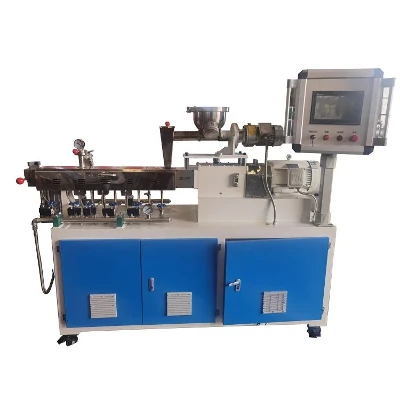
Selection Guide For Heating Technology Of Co Rotating Twin-screw Extruder: How To Match The Optimal Heating Scheme For Different Materials With COLOWE
1, Why is heater selection the invisible winner of plastic extruders?
According to industry research, about 30% to 35% of the energy consumption of plastic extruders is used for heating the barrel and die, while traditional resistance heaters waste more than 30% of the consumed energy due to thermal radiation and convection losses. The VDMA 24474 standard clearly states that the processing material itself has a decisive impact on the optimal design and energy consumption of the extruder, and the scientific selection of the heating system directly affects the energy consumption index per kilogram of plastic.
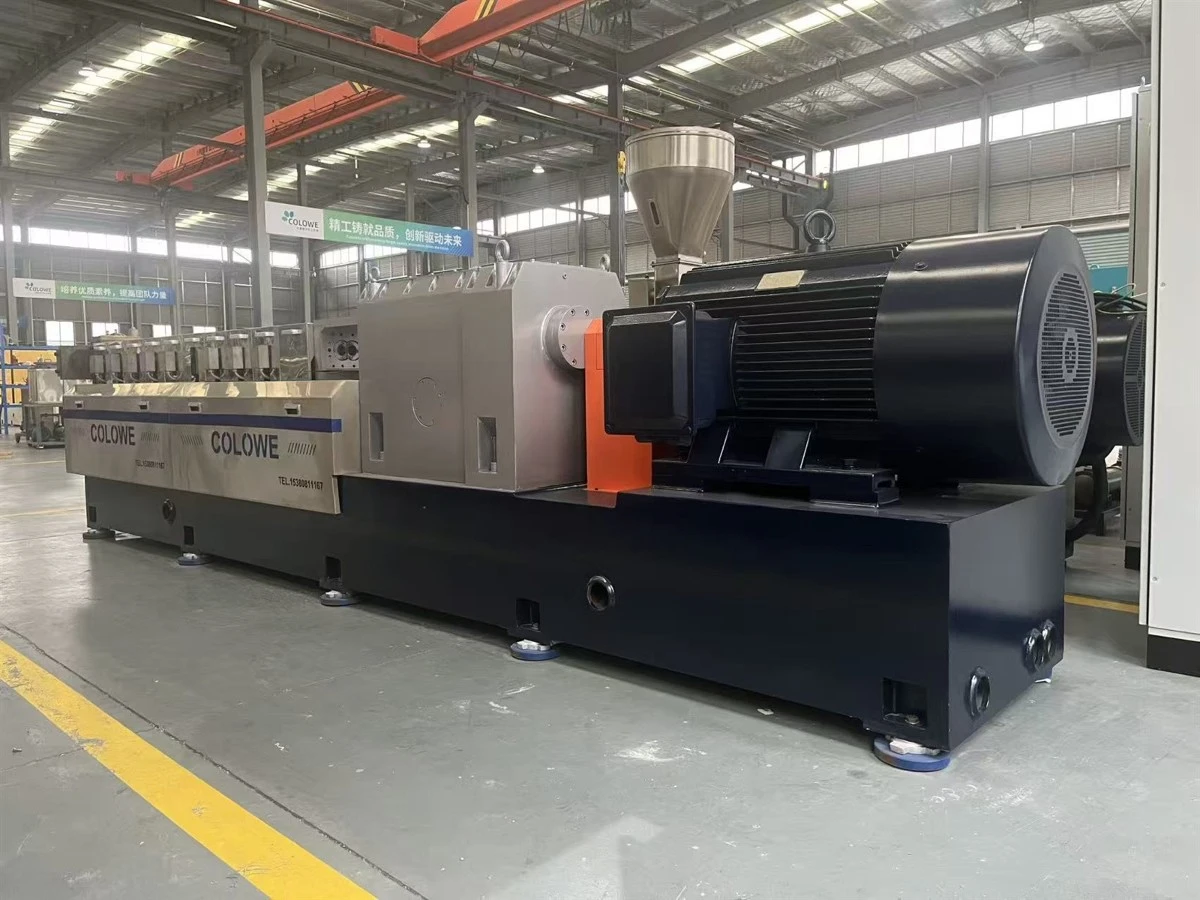
Before each co rotating twin-screw extruder leaves the factory, COLOWE will match the optimal heating scheme based on the material characteristics of the customer. For international customers who are new to extrusion granulation, understanding the characteristics and applicable scenarios of different heaters is the first step in reducing trial and error costs.
2, Which type of heater should be matched for different materials?
Far infrared heater: the preferred choice for thermosensitive materials
Thermally sensitive materials such as PVC, PLA, PBAT are extremely sensitive to temperature fluctuations, and local overheating can lead to thermal degradation and a decrease in molecular weight. The far-infrared heating coil uses high-purity quartz tubes to radiate far-infrared radiation, with a thermal conversion rate of up to 99.8%, a comprehensive energy-saving rate of 30% to 70%, and a heating rate that is 10% to 30% faster than traditional heating coils. Its radiation heating method does not rely on thermal conduction, and the surface temperature of the material cylinder is below 70 ℃, avoiding material interface overheating from the source. COLOWE's 35 type co rotating twin-screw extruder is equipped with this type of solution for granulation of fully degradable materials.
Electromagnetic induction heater: an efficient choice for engineering plastic modification
PA, PC, PEEK and other high-temperature engineering plastics require rapid and uniform heating ability. The electromagnetic heating coil directly acts on the barrel body, with a thermal efficiency of over 85%, which is 2 to 3 times higher than that of infrared heating devices. The COLOWE 50D co rotating twin-screw extruder, combined with a multi-stage independent PID temperature control system, can effectively disperse flame retardants and maintain stable process temperature in nylon flame retardant modification and fiberglass reinforced granulation.
Thermal oil heating and copper casting heater: high filling and precision temperature control scenarios
For high filling calcium carbonate masterbatch and large-scale continuous production lines, thermal oil heating can achieve precise temperature control within ± 1 ℃. The 50 twin-screw extruder from Kelongwell has successfully completed the high filling granulation experiment of PP with calcium powder, verifying the reliability of this type of scheme under harsh working conditions.
3, Environmental regulations force heating technology upgrade
The EU PPWR regulation will be fully applicable in August 2026, and the Carbon Border Adjustment Mechanism (CBAM) will continue to exert compliance pressure on the plastic processing industry. The penetration rate of high-efficiency and energy-saving models in the global plastic extruder industry has increased from 35% in 2024 to 48%. Choosing an energy-saving heating system is not only related to operating costs, but also directly affects the carbon footprint performance and market access qualifications of the product.
The modular screw structure co rotating twin-screw extruder showcased by COLOWE at the 2026 CHINAPLAS exhibition is a positive response to this trend - modular design allows customers to flexibly adjust heating configurations according to formula changes, extending equipment life cycle.
4, Common questions about heater selection
Q: How to determine which heater to choose when purchasing an extruder for the first time?
A: The core focus is on two variables - the thermal stability of the material and the target production capacity. Thermally sensitive materials are prioritized for far-infrared heating, and electromagnetic induction heating is recommended for high-temperature engineering plastics. For high filling systems, thermal oil solutions are considered. COLOWE provides full process services from material testing to equipment customization, helping customers to accurately match.
Q: Can far-infrared heating coils really save energy? Is the data reliable?
A: According to actual measurement data from multiple institutions, the comprehensive energy-saving rate of far-infrared heating coils is between 30% and 70%, and the service life can reach more than 10 years, far exceeding the 6 months of resistance heating coils and the 1 year of electromagnetic heating coils. For customers who pursue high cost-effectiveness extruders, this is an upgrade with a clear investment return cycle.
Q: How to synergistically optimize the co rotating twin-screw extruder and heating system of Kelongwell?
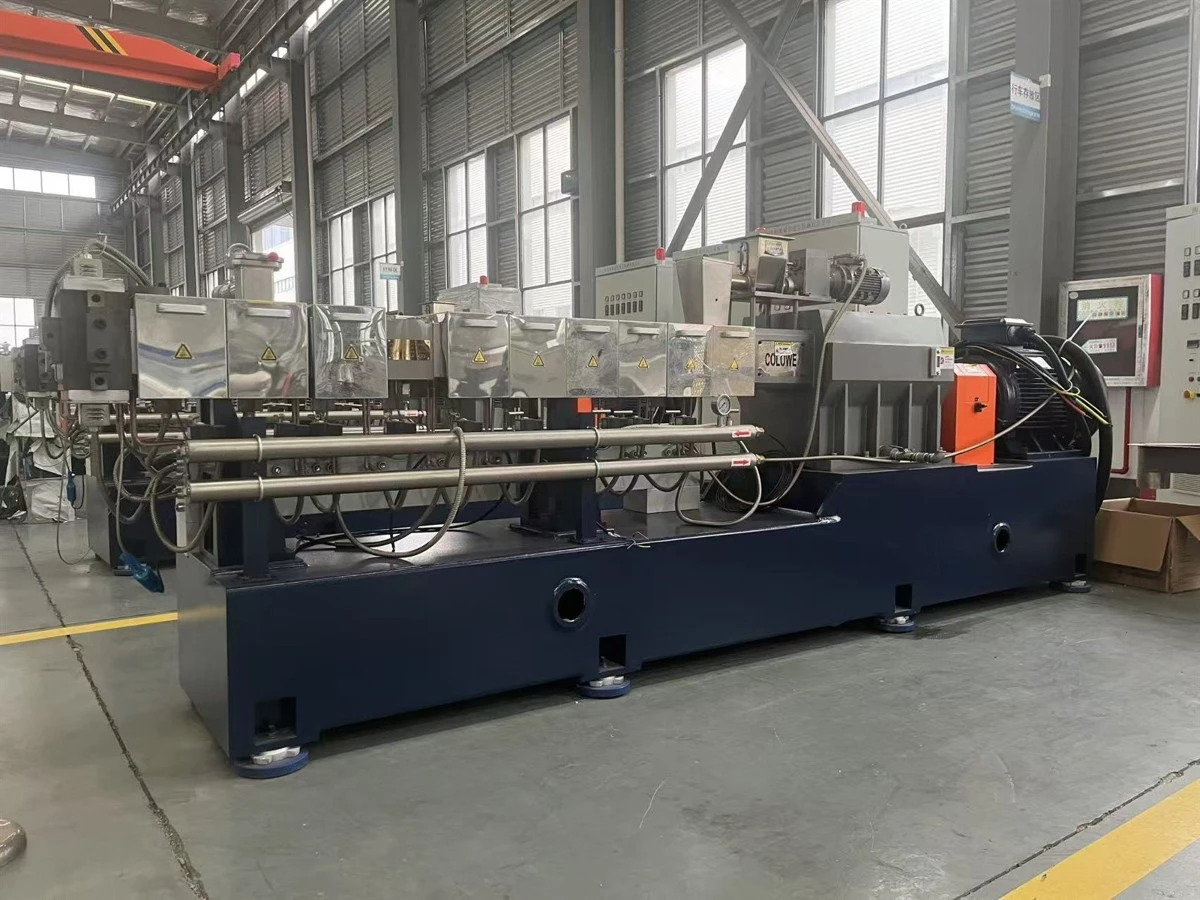
A: COLOWE adopts a stair free barrel design, effectively solving the problem of black spots caused by material retention. Each section of the cylinder can be independently temperature controlled, and with optimized screw element combinations, the heating energy can be accurately applied to the area required for material plasticization, reducing ineffective heat loss and achieving long-term stable operation of the cost-effective extruder.
5, Choose COLOWE, choose a heating solution for the future
In the field of extrusion granulation, the heater is not an isolated component, but an engineering solution deeply coupled with the screw configuration, cylinder design, and temperature control system. Based on a modular co rotating twin-screw extruder platform, COLOWE provides customized heating configurations for different scenarios such as degradable materials, engineering plastic modification, and recycled material granulation, helping global customers achieve reliable output with reasonable investment. In the third quarter of 2026, Kelongwell has delivered multiple cost-effective co rotating twin-screw extruder production lines to customers in Europe, Southeast Asia, and the Middle East, covering application areas such as rPET thickening.