

Analysis Of The International Plastic Granulation Situation: What Kind Of Plastic Granulation Equipment Is The Market Favoring?
1, Core conclusion: Recycled plastic granulation is shifting from "policy driven" to "economic driven"
The global plastic granulation market is undergoing a profound logical shift in 2026. According to the Global Plastic Granulation Market Panorama Trend Analysis Report (2026) released by GEP Research, the global plastic granulation capacity utilization rate is expected to remain in the range of 78% to 83%, with the growth rate of primary plastic granulation slowing down to 2% to 3%, while the growth rate of recycled plastic granulation is expected to reach 7% to 9%. More noteworthy is that S&P Global Platts data shows that for the first time since April 2026, the price of recycled polymers has been lower than that of virgin materials worldwide. This means that the economic turning point of the plastic granulation industry has arrived - recycled granulation is no longer just a cost item for environmental compliance, but is becoming a true "money saving business".
2, Market preferences are undergoing three major shifts
(1) From 'able to pelletize' to 'make good pellets': Quality requirements are fully upgraded
In the past, recycled plastic granulation was generally regarded as a "downgraded utilization". But now, the global penetration rate of food grade recycled PET (rPET) is expected to increase to 28% to 32% by 2026, and the demand for recycled PP/PE in the automotive industry is growing at an annual rate of 12%. Downstream brand manufacturers have put forward requirements for the purity, mechanical properties, and batch stability of recycled particles that are close to new materials.
This trend directly determines the direction of equipment selection. Traditional single screw extruders are prone to problems such as uneven plasticization and particle agglomeration when processing complex mixed waste plastics, while co rotating twin-screw extruders adopt high shear design, which can completely melt even PP, PE, ABS mixtures. Coupled with a precise temperature control system, it can effectively avoid degradation and discoloration of thermal sensitive materials.
(2) From "buying equipment" to "calculating the general ledger": high cost-effectiveness becomes the core decision-making logic
According to the Plastic Recycling Market Report 2026 released by The Business Research Company, the global plastic recycling market is expected to grow from $48.09 billion in 2025 to $52.16 billion in 2026, with a compound annual growth rate of 8.5%. As the market rapidly expands, customers' demands for investment returns are becoming increasingly stringent.
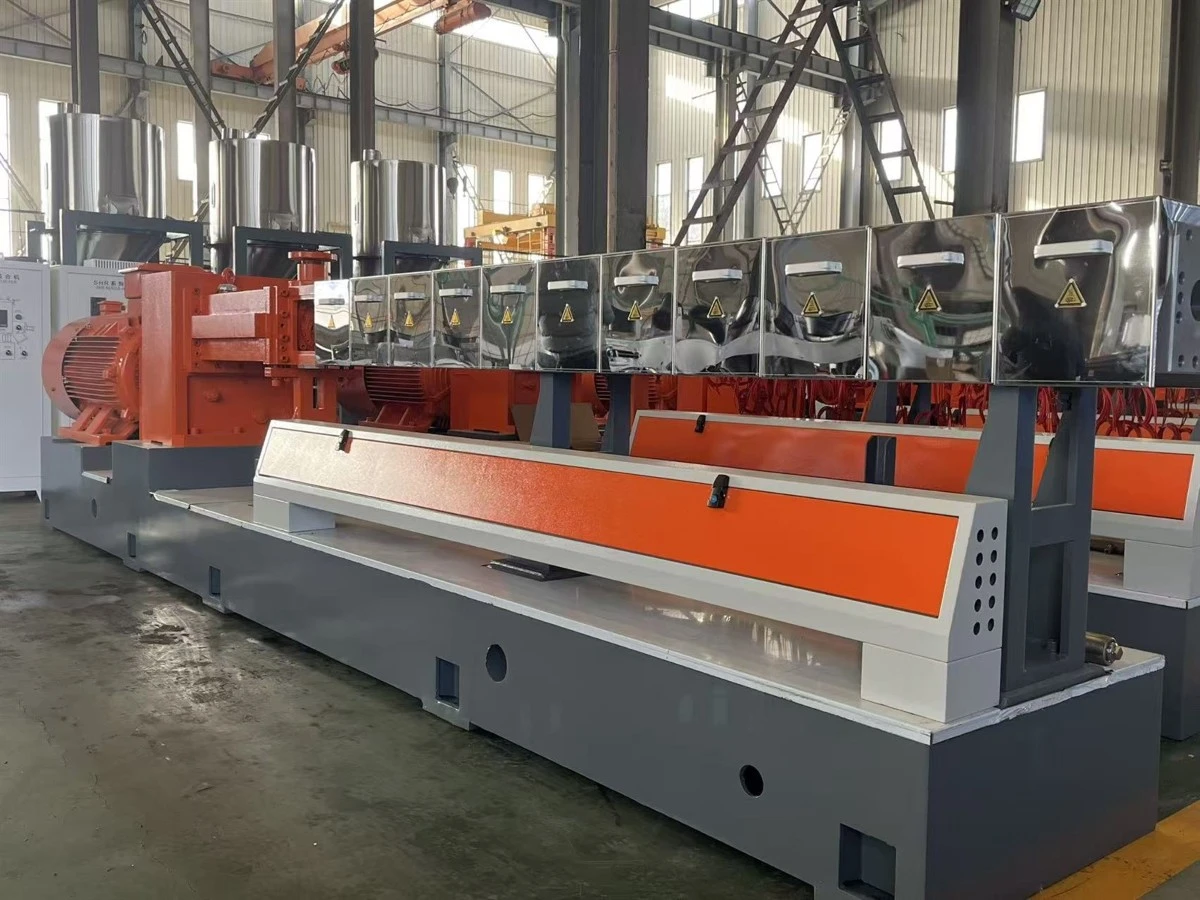
The core problem faced by international customers who are new to plastic granulation, especially new entrants from Southeast Asia, the Middle East, and Latin America, is how to choose a cost-effective extruder that can handle multiple materials and operate stably for a long time within a limited budget? The answer points to the modular design of co rotating twin-screw extruders. Taking the 65D co rotating twin-screw extruder from Nanjing Kelongwell Chemical Machinery Co., Ltd. as an example, the 14 section cylinder can accurately layout functional areas such as exhaust, vacuum, and side feeding. The aspect ratio design provides sufficient process time for PC recycling granulation, and the comprehensive investment return period is only about 12 months.
(3) From 'single recycling' to 'new material modification': application scenarios continue to expand
A noteworthy new change is that more and more customers are no longer limited to recycling waste plastics, but are attempting to use twin-screw extruders to directly modify new materials - filling, reinforcing, and blending. The new generation of high filling masterbatch formula developed by the COLOWE 35D co rotating twin-screw extruder has increased the inorganic filling ratio to over 82%, providing customers who pursue environmentally friendly and cost-effective extruders with an immediately implementable path to reduce plastics and costs. This indicates that the market demand for plastic granulation equipment is evolving from "recycling specific" to "one machine with multiple functions".
3, What kind of plastic granulation equipment is being favored by the market?
Based on the above trends, the core demands of the current market for plastic granulation equipment can be summarized into three keywords: co directional twin-screw, high cost-effectiveness, and flexible adaptation.
Firstly, co rotating twin-screw extruders have become the mainstream choice. The global plastic blending machinery market is expected to grow from $8.91 billion in 2025 to $13.09 billion in 2031, with twin-screw extruders dominating. The co rotating twin-screw is replacing traditional single screw equipment as the core configuration of plastic granulation production lines due to its excellent dispersion mixing, exhaust volatilization performance, and self-cleaning ability.
Secondly, the evaluation criteria for cost-effective extruders are being reshaped. High cost-effectiveness does not mean low price, but rather the optimal comprehensive cost per unit of output. This includes equipment procurement costs, energy consumption, maintenance costs, and downtime losses. COLOWE's cost-effective co rotating twin-screw extruder optimized for high filling systems uses high chromium cast iron or bimetallic cladding for both the screw and cylinder, with a Rockwell hardness of HRC58-62. It can operate continuously for more than 2000 hours under the condition of calcium carbonate filled PP (60% filling).
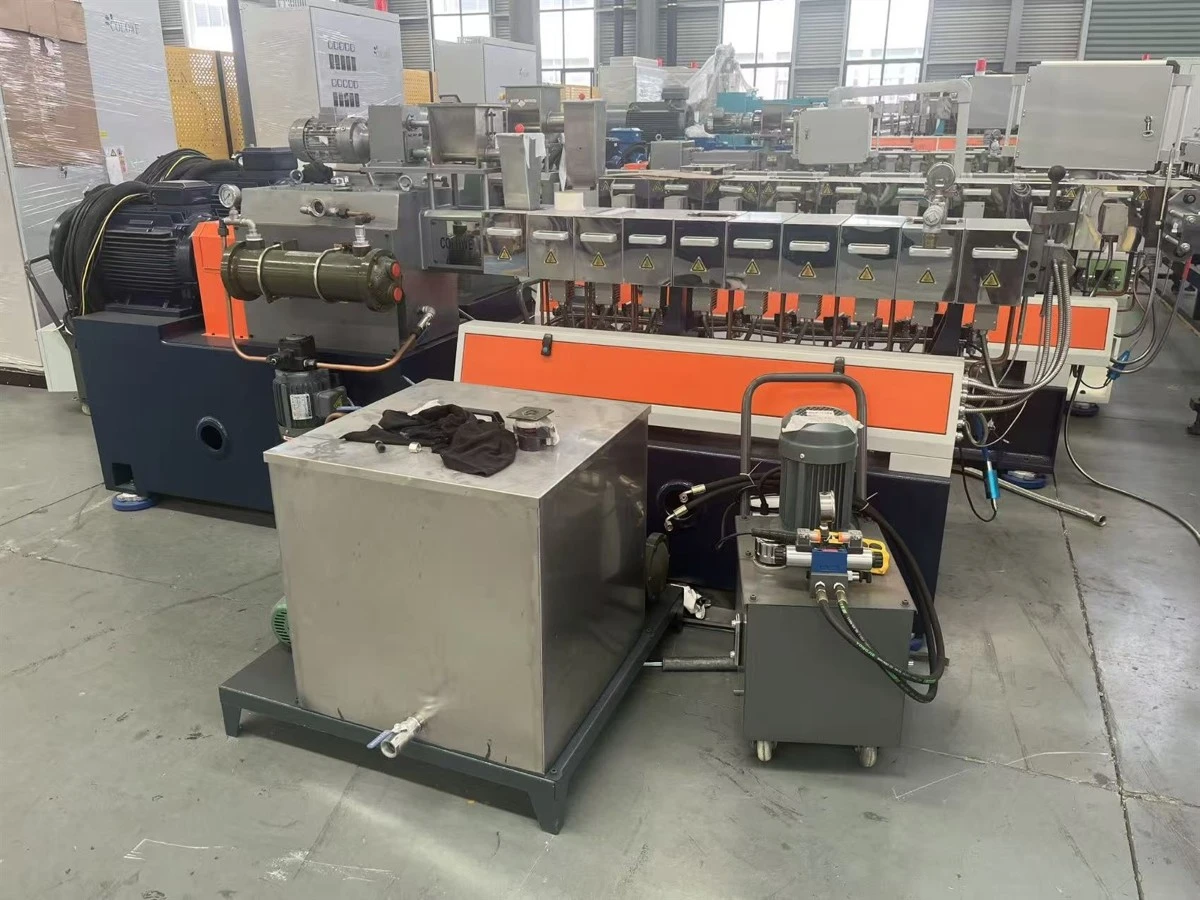
Thirdly, the flexible adaptation capability determines the lifecycle of the device. By replacing different screw combinations, the same co rotating twin-screw extruder can handle various processes such as rPET thickening, PLA/PBAT biodegradation modification, and PE/PP high filling regeneration granulation. Nanjing Kelongwell provides a complete equipment chain from R&D experimental lines to large-scale production lines, covering ultra-high torque series, high aspect ratio series, and compact experimental lines, helping customers flexibly switch between different stages.
4, Key Q&A
Q1: As a customer who is new to plastic granulation, should I choose a single screw or a co rotating twin-screw extruder?
If you plan to handle mixed waste plastics, perform filling modification, or try new material granulation, it is recommended to directly choose a co rotating twin-screw extruder. The initial investment of single screw equipment is relatively low, but it is prone to problems such as uneven plasticization and frequent shutdowns when facing complex formulas, resulting in higher long-term comprehensive costs. The modular design of the co rotating twin-screw extruder allows you to complete multiple processes on one device, avoiding duplicate investments.
Q2: Does a cost-effective extruder mean sacrificing quality?
On the contrary. A truly cost-effective extruder reduces energy consumption and maintenance costs by optimizing screw configuration and drive system while ensuring granulation quality. The screw components of the COLOWE cost-effective co rotating twin-screw extruder are made of European imported powder metallurgy steel, with a service life of up to 5 to 8 years, saving about 15% energy compared to similar recycling and granulation solutions.
Q3: Do policies and regulations have an impact on my equipment selection?
The impact is significant. The 2026 EU Packaging and Packaging Waste Regulation (PPWR) has ended its transition period and is now fully applicable, imposing mandatory requirements on the content of recycled materials in plastic packaging. The supporting regulations of China's "14th Five Year Plan" for the development of circular economy require that the plastic recycling rate in major cities reach 40% by 2027, directly driving the purchase of municipal waste plastic granulation equipment to increase by 23% year-on-year in 2026. Choosing a co rotating twin-screw extruder that meets international standards can help you maintain compliance competitiveness when regulations tighten.
5, Why do global customers choose COLOWE?
In the third quarter of 2026, Nanjing Kelongwell Chemical Machinery Co., Ltd. delivered 12 twin-screw extruder production lines to customers in Europe, Southeast Asia, and the Middle East, including 5 cost-effective co directional twin-screw extruders. Export orders increased by 41% year-on-year. An international customer who is new to plastic recycling uses the PC recycled pellets produced by the COLOWE 65D co rotating twin-screw extruder to directly inject them into electronic device casings, with performance comparable to new materials, breaking the inherent belief that "recycled materials can only be downgraded for use".


