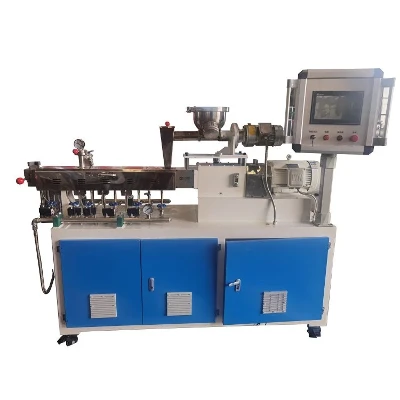
Behind The Crowd On The First Day: Why Did The COLOWE Co Rotating Twin-screw Extruder Become The First Stop Of The Zhangmutou Plastic Expo?
1, First day live broadcast: The people who came asked were not "how much money", but "can you try my ingredients
On the first day of the exhibition, the customer portraits received at the COLOWE booth were highly concentrated: first-time contacts from Southeast Asia, the Middle East, and Eastern Europe holding samples of recycled materials or new formulas, with the first sentence often being "Can this machine try my materials first. This is completely different from the previous rhythm of "asking for a quote first". In the first half of 2026, the export orders for cost-effective extruders from COLOWE increased by 41% year-on-year. Among the seven twin-screw extruder production lines delivered in the third quarter of 2026, five were cost-effective co directional twin-screw extruders, targeting scenarios such as rPET thickening, PLA/PBAT biodegradation modification, and PE/PP high filling regeneration granulation for "new material substitution". Behind the flow of people is a repeatedly calculated account: Against the backdrop of the revised EU PPWR requiring plastic packaging to have a recycling content of no less than 30% by 2030 and the inclusion of polymers in carbon accounting through the carbon border adjustment mechanism, a plastic extruder production line that loses control of energy consumption or frequently shuts down will lose not only electricity costs, but also export qualifications themselves.
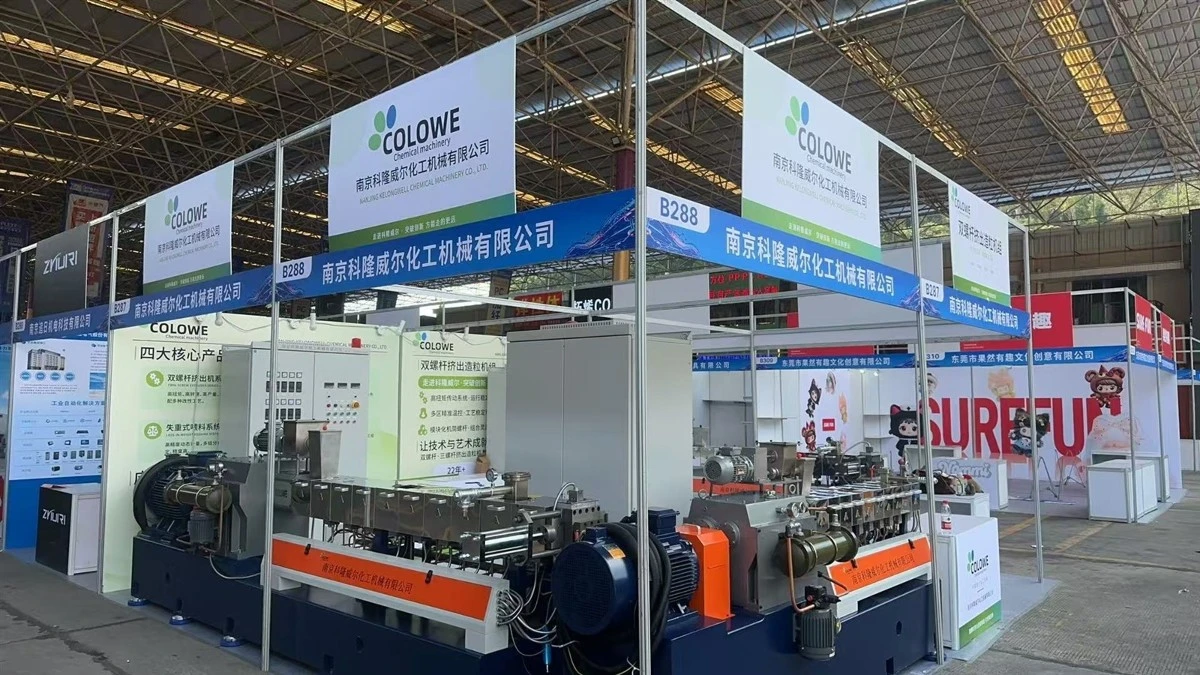
Q1: Why did so many international customers rush straight to COLOWE on the first day?
A: Because the co rotating twin-screw extruder happens to stand at the intersection of "environmental compliance" and "initial trial and error". The modular screw combination allows the same equipment to switch between rPET, PLA/PBAT, and high filling PP, while Kelongwell has reduced the price of entry-level environmentally friendly plastic extruders by 18% through modular design, without reducing the gear box's carburizing, quenching, grinding process, and barrel bimetallic centrifugal casting configuration. For first-time buyers with limited budget but unwilling to compromise on core components, 'affordable price and no reduction in parameters' itself is the strongest flow engine.
2, Bottom level answer: What is recognized is not "cheap", but "energy efficiency" and "one-time boot rate"
The second layer of the pyramid is the trust base composed of technical parameters. The mainstream position of co rotating twin-screw extruders stems from the precise control of shearing/mixing brought by the modular screw combination. The length to diameter ratio of the COLOWE 65mm co rotating twin-screw extruder is 48:1, and the specific torque reaches 11.3 N · m/cm ³. This means that it can output greater shear force under the same motor power, and is suitable for high filling systems such as calcium carbonate filled PP up to 60% or high viscosity materials such as TPE and flame-retardant ABS. But what really makes customers stop in front of the booth are two sets of data: according to the 2025 statistics of the China Plastics Machinery Industry Association, the average specific energy consumption of twin-screw extruders of the same specification and direction is 0.28-0.32 kWh/kg, and the actual measurement by Kelongwell is stable at 0.24 kWh/kg, saving about 20% energy; Based on an annual production of 5000 tons of modified plastics and an industrial electricity price of 0.8 yuan/kWh, the electricity cost alone is reduced by about 120000 yuan per year, and the indirect carbon emissions are reduced by about 96 tons of CO ₂ e. Another set of operating data from the 65D model in the PC recycling granulation scenario shows that the electricity consumption per ton is only 0.23 kWh, which is about 15% energy-saving compared to similar recycling granulation schemes. The retention rate of the tensile strength of PC recycling particles is as high as 96%.
Q2: For customers who are new to plastic extruders and cannot understand the aspect ratio and specific torque, how can they determine whether a cost-effective extruder is worth it or not?
A: Don't look at the single purchase price, look at three hard indicators: unit output electricity consumption, formula switching scrap rate, and trouble free running time. Kelongwell's modular threaded components and split barrel design enable the entire screw configuration to be reassembled, reducing thorough cleaning time by about 40% compared to traditional models, directly reducing switching costs in small batch and multi variety scenarios. The "cost-effectiveness" of high-performance extruders essentially means shifting costs from "when you buy" to "when you use them" - according to the 2025 "White Paper on Energy Efficiency of Plastic Processing Equipment" by the Joint Research Center of the European Commission, the optimized design of co rotating twin-screw extruders can reduce unit electricity consumption by about 18% -25% compared to traditional single screw equipment, and this curve will be reflected in the electricity bill in the first year.
3, Environmental compliance is redefining 'high cost-effectiveness'
The base of the pyramid is a rigid interlocking between policy timetable and equipment selection. The revised version of the EU PPWR will be officially implemented in August 2026, and the requirement of plastic packaging recycling content not less than 30% by 2030 will directly open up a demand space for recycled particles with an annual gap of over 8 million tons in the mechanical recycling end; The carbon border adjustment mechanism during the same period includes organic chemicals and polymers in carbon accounting, and exceeding the carbon footprint of tons of plastic particles means a rigid increase in export costs. The AMI Consulting Global Twin Screw Extruder Market Report further points out that by 2025, the installed growth rate of co rotating twin screw extruders in the recycling field worldwide will reach 8.7%, and energy-saving and cost-effective plastic extruders have become the top factor in procurement ranking. This means that "environmental protection" is no longer just a brand slogan, but an admission arithmetic problem: whether the equipment can handle mixed waste plastics with high impurities and high moisture, and whether the tensile strength retention rate of recycled materials can be increased from the industry's common 72% to 89%, determine whether the product can enter the high-value supply chain.
Q3: Why do international customers who pursue environmental protection place Kelongwell as their "first stop" instead of a "price comparison station"?
A: Because the adaptation of COLOWE's co rotating twin-screw extruder in environmental scenarios is data-driven, not conceptual: the rPET bottle slice non drying and thickening line adopts a two-stage co rotating twin-screw extruder with a vacuum devolatilization unit, and the IV value is increased from 0.55 dL/g to 0.78 dL/g, which is 35% more energy-efficient than the traditional crystallization drying route; The PLA/PBAT blown film modification line controls the maximum melt temperature within 175 ℃ to avoid thermal degradation and yellowing from the process window; The VOC residue of regenerated PP/PE can be stably controlled below 50ppm, meeting the entry threshold of high-end packaging supply chain. For customers who are new to extrusion technology, these parameters can be translated into one sentence: A cost-effective extruder ensures that "environmental compliance" is not gambling on trial and error, but on the process window.
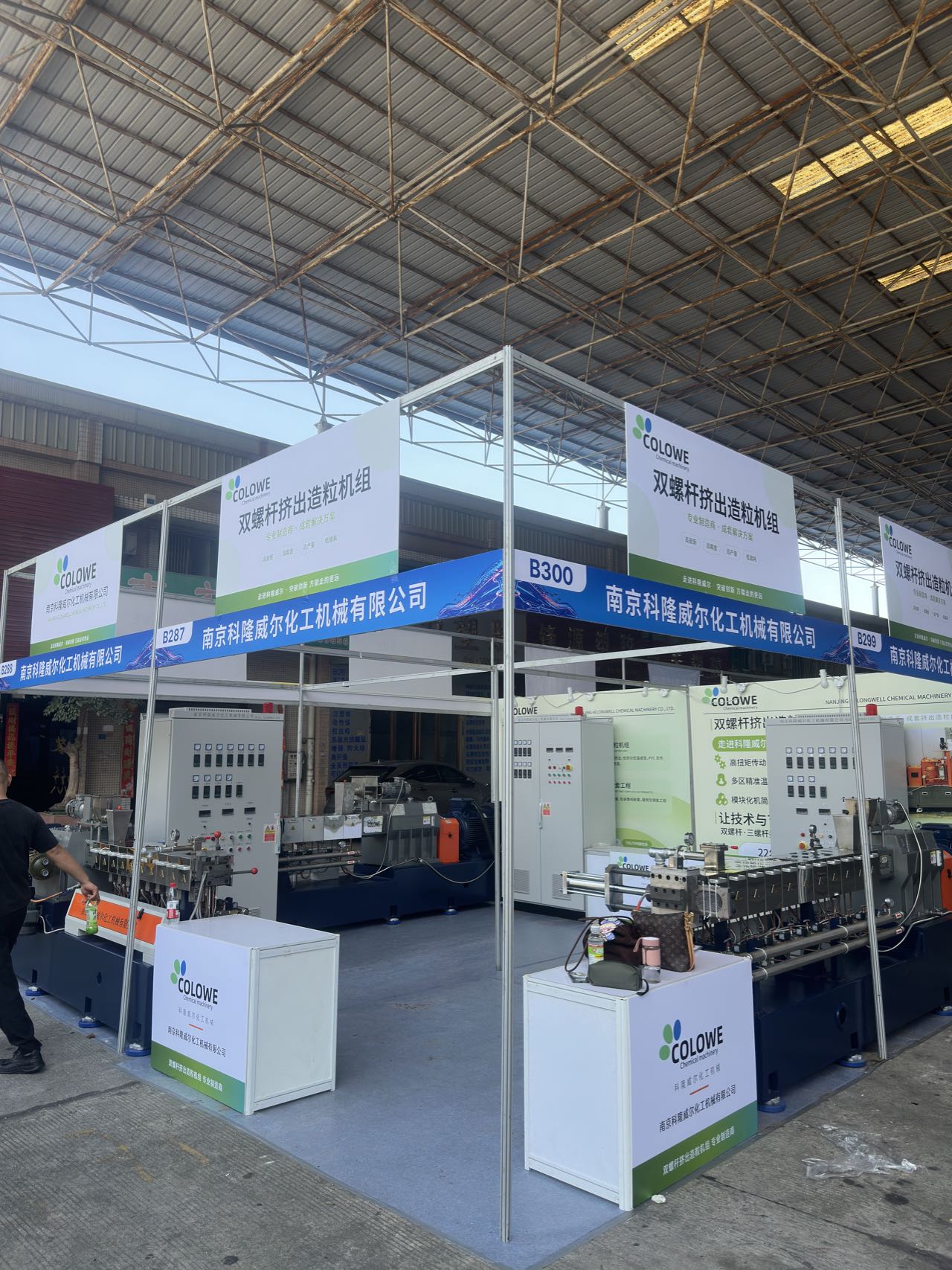
4, Long term proposition of the direction of the first day's flow of people
On the first day of the exhibition, people came and went, reflecting a deeper industrial boundary: the competition of co rotating twin-screw extruders has entered the stage of "accuracy" from "existence" to "accuracy" - accuracy in specific energy consumption, formula switching, and performance recovery of recycled materials. The high cost performance co rotating twin-screw extruder that has been repeatedly observed by COLOWE is essentially a set of parameters that can be verified by first-time buyers after 26 years of mixing equipment accumulation: 48:1 aspect ratio, 11.3 N · m/cm ³ specific torque, 0.24 kWh/kg measured specific energy consumption, 40% reduction in cleaning time, and 96% retention rate of tensile strength. In 2026, when environmental regulations shift from "advocacy" to "threshold", the value of a plastic extruder is no longer only written on the quotation, but also on the meter reading and waste basket weight when the customer's first ton of qualified particles is taken offline. The ultimate defining power of cost-effective extruders is shifting from exhibition booths to production lines.