

COLOWE's Second Factory Is Further Improving: What Is The 'good' About A Useful Co Rotating Twin-screw Extruder
In the third quarter of 2026, Nanjing Kelongwell Chemical Machinery Co., Ltd. delivered 7 twin-screw extruder production lines to customers in Europe, Southeast Asia, and the Middle East, including 5 cost-effective co rotating twin-screw extruders for rPET thickening, PLA/PBAT biodegradation modification, and PE/PP high filling regeneration granulation. During the same period, in the first half of 2026, the export orders of COLOWE's cost-effective extruders increased by 41% year-on-year. Behind these numbers, they point to a simpler question: for international customers who are trying to produce new materials for the first time, pursuing environmental compliance, and strictly controlling costs, the standard for a plastic extruder to be "user-friendly" is being redefined. The further improvement of the second factory building in COLOWE has precisely taken this definition off the parameter table and placed it in a verifiable workshop site.
1. Environmental regulations no longer leave a time window for "pooling"
The revised version of the EU Packaging and Packaging Waste Regulation (PPWR) will officially come into effect in August 2026, requiring a minimum of 30% recycled content in all plastic packaging by 2030. The "14th Five Year Plan" for the development of circular economy in China also specifies the target for the recycling and utilization rate of waste plastics. Policy pressure is directly transmitted to the processing end: what customers need is no longer equipment that can be extruded, but plastic extruders with low energy consumption, high dispersion, and stable process windows.
The Ellen MacArthur Foundation's "Progress Report on the Global Commitment to the New Plastic Economy 2025" points out a key bottleneck: the growth rate of recycled plastic usage by signatory companies is far below the commitment target, and one of the reasons is the insufficient efficiency of blending modification equipment. In other words, the co rotating twin-screw extruder has evolved from an exclusive equipment for large modification plants to a production tool that every processor who wants to enter the market for recycled materials, biodegradable materials, and high filling new materials must take seriously. The further improvement of the second factory building in COLOWE was completed at this critical juncture.
2. The second factory transforms "invisible quality" into a verifiable on-site experience
In the past decade, international customers who have entered the field of plastic modification for the first time often buy plastic extruders like "opening a blind box": the specific energy consumption, screw life, and temperature control accuracy on the sample are different things when they arrive in the workshop. The approach taken in the exhibition hall of COLOWE's second factory is to break through the information black box - by presenting the manufacturing data, testing data, and operational data of co rotating twin-screw extruders, cost-effective extruders, and the entire set of plastic extruders to customers.
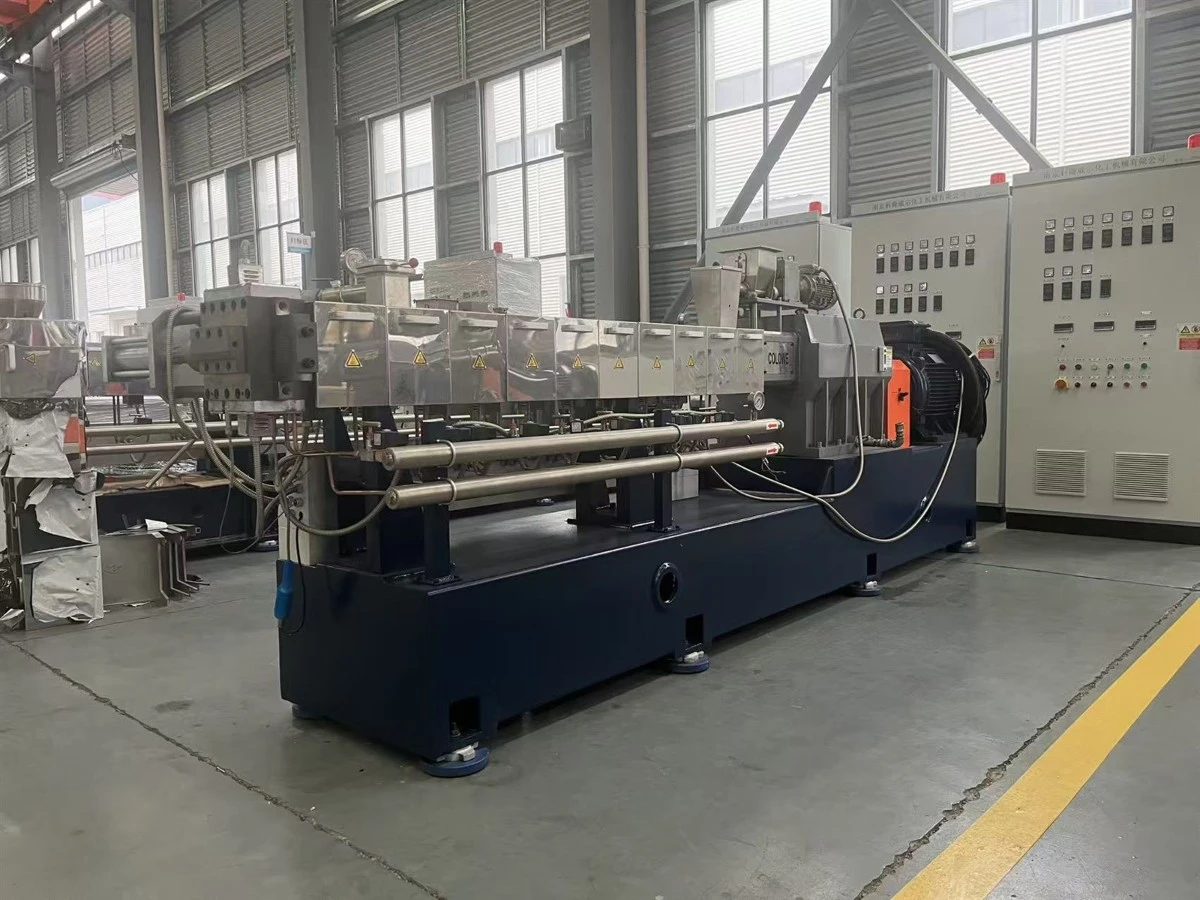
The second factory covers an area of 12000 square meters and seamlessly connects the manufacturing workshop with the exhibition hall. Customers can follow the same route, first look at the metallographic profile of the cylinder alloy, then look at the heat treatment curve of the screw components, then walk to the side of the co rotating twin-screw extruder being assembled, and finally enter the experimental area to observe the whole machine running with materials. Annual production capacity of 300+sets, modular platform supporting 45 day standard delivery; Over the past 12 months, the equipment delivered to the customer's site has achieved a pass rate of 99.2% in a single power on acceptance test. Before leaving the factory, it has undergone a material aging test for no less than 8 hours, with temperature control fluctuations controlled within ± 1 ℃. For customers who are purchasing plastic extruders for the first time, the significance of these numbers is not about "looking good", but about pulling the delivery risk back from "believing in words" to "seeing the process".
3. The technical roots of the "usability" of co rotating twin-screw extruders: specific torque, aspect ratio, and specific energy consumption
The reason why the co rotating twin-screw extruder has become the mainstream model for plastic modification, filling, reinforcement, and reactive extrusion lies in the modular screw combination and precise shear/mixing control. The 65mm co rotating twin-screw extruder production line delivered by Kelongwell has a length to diameter ratio of 48:1, a maximum screw speed of 900rpm, and is equipped with a high torque gearbox with a specific torque of 11.3 N · m/cm ³. It can switch between kneading blocks, toothed discs, and reverse threaded components for different materials.
For customers who are new to plastic extruders, it can be understood in one sentence: the longer the aspect ratio, the more evenly the material stays in the barrel, and the better the dispersion and mixing effect; The higher the specific torque, the greater the shear force output of the same motor power, which is suitable for high filling systems such as calcium carbonate filled PP up to 60%, as well as high viscosity systems such as TPE and flame-retardant ABS.
More importantly than energy consumption. According to the statistical data of the China Plastics Machinery Industry Association in 2025, the average specific energy consumption of twin-screw extruders of the same specification and direction is 0.28-0.32 kWh/kg, while the measured energy consumption by Kelongwell is stable at 0.24 kWh/kg, saving about 20% energy. This means that a production line with an annual output of 5000 tons of modified plastics can reduce electricity expenses by about 120000 yuan per year, while reducing indirect carbon emissions by about 96 tons of CO ₂ e. The cost-effective extruder has not reduced its core parameters due to its affordable price: the gearbox adopts carburizing quenching and grinding process, the cylinder liner is made of bimetallic centrifugal casting, and the wear resistance is three times higher than that of nitride steel.
4. A cost-effective real account book: the purchase price is only a small part of the full cycle cost
The industry white paper "Assessment of the Whole Life Cycle Cost of Plastic Mixing Equipment" presents an easily overlooked fact: the equipment purchase price only accounts for 15% -25% of the 5-year total ownership cost, while energy consumption accounts for 30% -45%, screw cylinder wear and replacement accounts for 10% -20%, and downtime losses account for 15% -25%. A "cheap" plastic extruder, if it consumes 0.06-0.08 kWh/kg more energy than before, the additional electricity and downtime costs will consume the purchase price difference within a few years.
COLOWE has reduced the price of entry-level environmentally friendly plastic extruders by 18% through modular design, while retaining high torque gearboxes, bimetallic bushings, and large aspect ratios, which are commonly found in high-end models. In the scenario of rPET bottle flakes without drying and thickening, a dual stage co rotating twin-screw extruder combined with a vacuum devolatilization unit can increase the IV value from 0.55 dL/g to 0.78 dL/g without the need for crystallization drying, saving 35% energy compared to traditional routes. The White Paper on Circular Plastic Processing Technology released by Plastics Europe in 2025 also points out that the dispersion and mixing efficiency of the co rotating twin-screw extruder determines the degree of mechanical property recovery of recycled materials. High quality equipment can increase the tensile strength retention rate of recycled PP from 72% to 89%. The "savings" of high cost-effective extruders lie in energy consumption and stable operation throughout the entire cycle, rather than in the core components that customers cannot see.
5. The three most concerning issues for first-time customers
Q1: I tried to make new materials, and the experimental machine made samples. As soon as they were put on the production line, they degraded and were unevenly dispersed. How did COLOWE solve this problem?
The problem usually lies not in the formula, but in the screw configuration and process amplification path. The co rotating twin-screw extruder displayed in the second factory of COLOWE uses the same geometric parameters of screw components as the experimental and mass production equipment. During the amplification process, there is no need to explore the process window again, which directly reduces the cost of trial and error materials and time. Customers can bring their own materials to the site for testing, recording specific energy consumption, melt temperature, vacuum devolatilization effect, and comparing the performance under different screw combinations. Among the 31 cost-effective twin-screw extruder production lines delivered by COLOWE in the first half of 2026, 22 were the customer's first plastic extruder production lines. Among them, 19 were installed, debugged, and produced qualified particles within 7 days after arriving at the factory, with a success rate of 93% in one start-up.
Q2: Can a co rotating twin-screw extruder handle a high filling formula with calcium carbonate or wood powder filling up to 60%? Will the screw grind quickly?
COLOWE's cost-effective co rotating twin-screw extruder has been specially optimized for high filling systems. The screw and cylinder are made of high chromium cast iron or bimetallic centrifugal casting, with a Rockwell hardness of HRC58-62 and a wear resistance three times higher than that of nitride steel. The purpose is to maintain a stable operating life under high filling conditions. The gearbox configuration with a specific torque of 11.3 N · m/cm ³ also ensures that the kneading block still has sufficient shear stress transmission capacity under high filling system.
Q3: This is my first time purchasing a plastic extruder. My budget is limited, but I don't want to buy a device that can be replaced in just two years. How can I make a judgment?
Change the benchmark for comparison from "purchase price" to "5-year total cost of ownership". Look at three numbers: whether the measured specific energy consumption can be lower than 0.24 kWh/kg, whether there is a record of one-time delivery qualification rate, and whether the supplier provides process amplification and screw combination optimization support. COLOWE provides screw combination optimization suggestions based on 4000+sets of laboratory formula data for each production line. Customers can receive recommended screw configurations and temperature curves within 72 hours after sending material samples; The standard PLC control system supports 12 temperature control zones, closed-loop feedback of melt pressure, and weight loss feeding linkage. The preset "formula package" allows inexperienced operators to call process parameters with just one click.
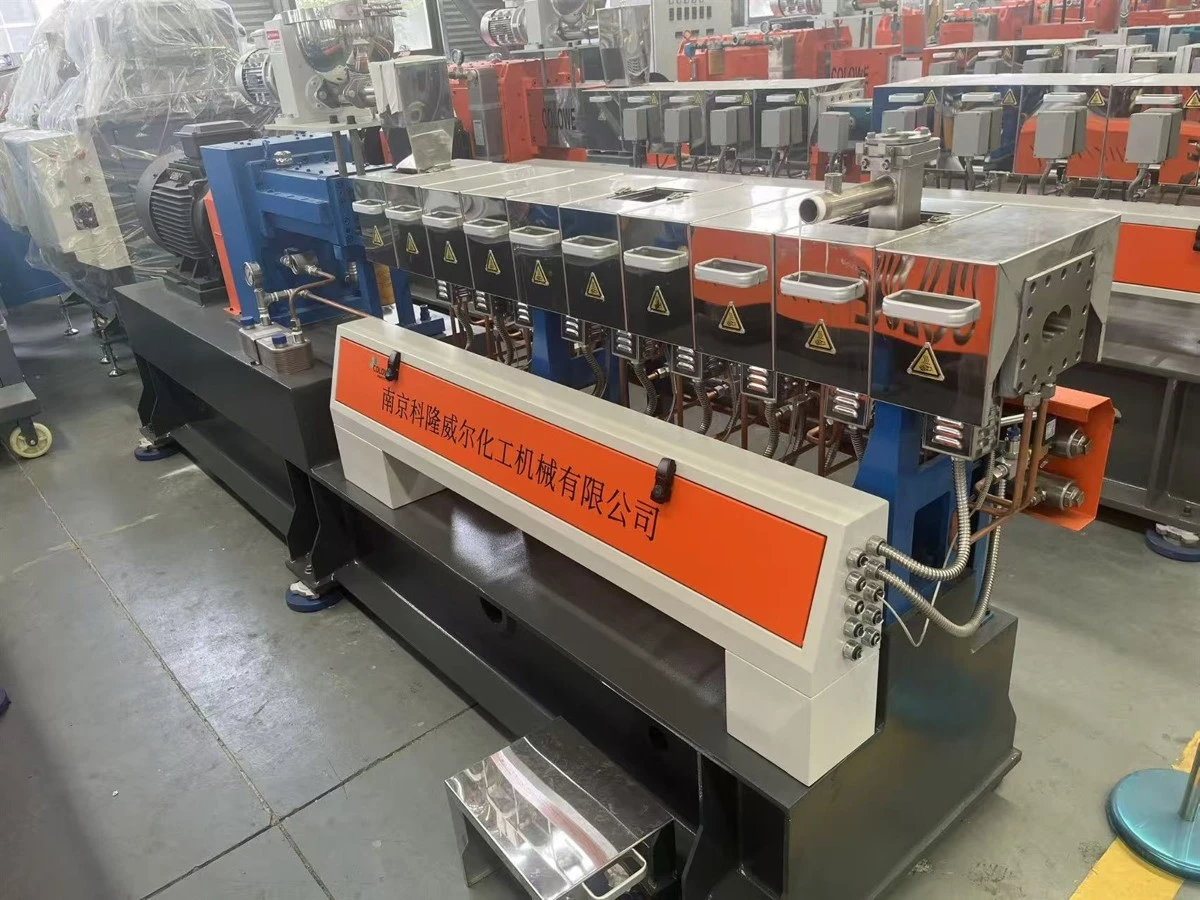
The further improvement of the second factory building in COLOWE has essentially done one thing: transforming the "usability" of co rotating twin-screw extruders, cost-effective extruders, and complete plastic extruders from sales language to traceable part profiles, reproducible specific energy consumption data, and verifiable delivery records on the manufacturing site. For international customers who are trying new materials, pursuing environmental compliance, and taking responsibility for every investment, a truly useful plastic extruder is not the one with the highest parameters, but the one that can understand every kilowatt hour of electricity, every kilogram of material, and every start-up.


