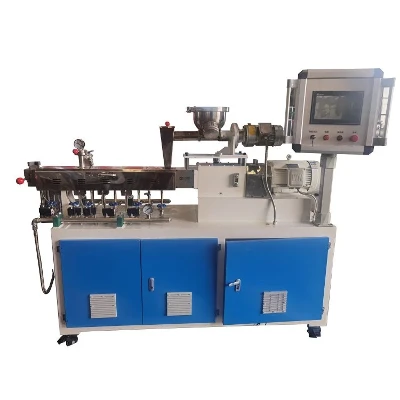
How COLOWE Manufactures Masterbatch Of Different Grades: The Selection Logic Of Co Rotating Twin-screw Extruders Deduced From The Formula
The "grade" of masterbatch is never just written in the product catalog. It is hidden in the degree to which the carbon black agglomerates are opened, in the bonding strength between the calcium carbonate particles and the resin interface, and also in the stable specific energy consumption curve of each ton of masterbatch when it leaves the factory. The global masterbatch market is expected to reach $10.54 billion by 2026, with a compound annual growth rate of 5.9%, and the fastest growing demand comes from categories such as fillers, colorants, and additive masterbatch that are extremely sensitive to dispersion quality. For international customers who are new to masterbatch manufacturing and pursue high cost-effectiveness and environmental compliance, whether a co rotating twin-screw extruder can match the formula determines whether it produces ordinary filler clusters or truly functional masterbatch.
1, Conclusion at the top of the pyramid: Formula grade determines the configuration language of co rotating twin-screw extruders
The essence of masterbatch manufacturing is to complete the three actions of "wetting dispersion stability" within a limited thermomechanical history. The requirement for filling masterbatch is to distribute and mix the high concentration powder evenly in the carrier without agglomeration; Color masterbatch pursues dispersion and mixing, cutting pigment aggregates into primary particles and locking in color intensity; Additive masterbatch often faces thermosensitive active ingredients, requiring low shear, narrow retention, and precise temperature control. The three objectives correspond to three different screw configuration languages: the misalignment angle of the kneading block, the position of the reverse threaded element, the distribution of aspect ratio, and the reserve of specific torque. There is no "universal screw", only "screw matched with formula".
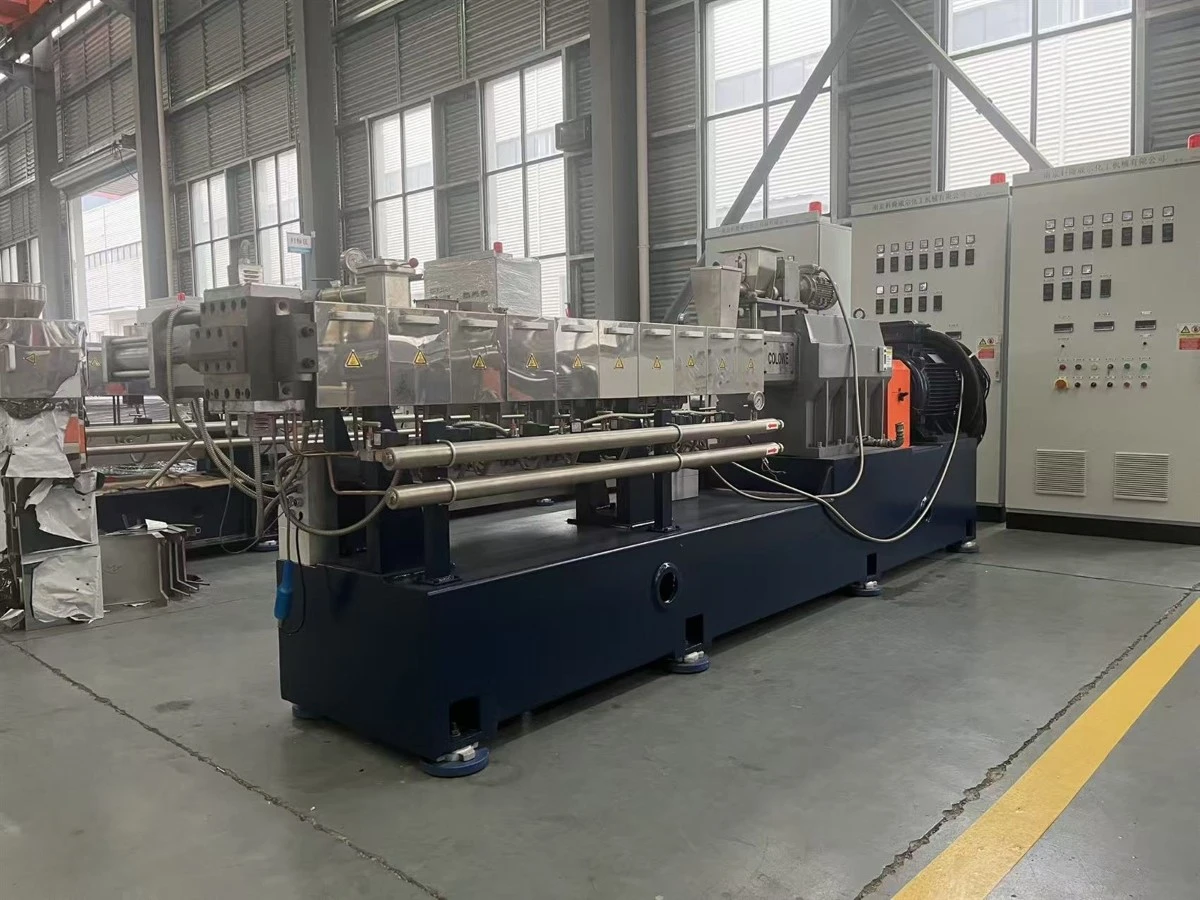
The first principle that COLOWE adheres to on co rotating twin-screw extruders is to read the formula first and then determine the configuration. For high filling systems, the screw combination focuses on the alternating arrangement of forward kneading blocks and slotted spirals, extending the distribution mixing path while avoiding excessive shear that may cause resin degradation; For high concentration color masterbatch, the dispersion shear zone is strengthened, and a length to diameter ratio of 44:1 to 48:1 is used to ensure that the pigment obtains sufficient wetting and refinement time in the melt. The COLOWE 65mm co rotating twin-screw extruder production line comes standard with a 48:1 aspect ratio, a maximum screw speed of 900rpm, and a gearbox specific torque of 11.3 N · m/cm ³. This torque reserve allows the equipment to output sufficient shear stress at low and medium speeds when processing PP systems with a calcium carbonate filling of 60%, without the need to rely on increasing the speed to achieve a "hard pull" dispersion effect.
2, Filling masterbatch: High torque reserve is the first threshold for "cost-effective extruders"
The formula logic for filling masterbatch is simple yet cruel: the cheaper the powder, the higher the addition ratio, and the more honest the wear and torque consumption of the equipment. When the filling amount of calcium carbonate or talc powder enters the range of 40% to 60%, the viscosity of the melt sharply increases, and the screw needs to provide continuous mixing capacity without sacrificing production. Industry data shows that the average specific energy consumption of twin-screw extruders of the same specifications and direction ranges from 0.28 to 0.32 kWh/kg. However, in the continuous production of PP+40% calcium carbonate filling granulation by Kelongwell, the measured power consumption per ton can be reduced to 0.24 to 0.25 kWh/kg, with an energy-saving rate of about 15% to 20%.
Behind this set of data are two configurations that are easily cut by "low-priced equipment": the carburizing, quenching, and grinding process of the gearbox, and the bimetallic centrifugal casting of the cylinder liner. COLOWE's cost-effective extruder did not compromise these two core parameters due to its affordable price. The wear resistance of the lining is about three times higher than that of nitride steel, and the design life of the gearbox exceeds 10 years. For international customers who pursue environmental protection and full lifecycle cost, this means that running a plastic extruder on the filling masterbatch production line for an additional three years can save on downtime and replacement costs, as well as electricity bills, enough to cover the price difference when purchasing for the first time.
3, Color masterbatch and additive masterbatch: The specific torque and temperature control accuracy determine whether the color value is valuable or not
The grade difference of color masterbatch is manifested on the client side as coloring power, color difference, and batch consistency; Inside the extruder, it is manifested as whether the pigment aggregates have been opened up to the particle scale. The high-frequency shear generated in the meshing area of the co rotating twin-screw extruder is the key to opening the agglomerates, but excessive shear can cause local temperature rise, leading to irreversible damage to organic pigments and thermosensitive additives. COLOWE adopts a modular threaded element and split barrel design on the co rotating twin-screw extruder. The entire screw configuration can be recombined according to the characteristics of the carrier resin (PE, PP, PET, ABS, etc.) and pigment, reducing the thorough cleaning time by about 40% compared to traditional models, making formula switching no longer at the cost of "half a day of downtime".
For the common thermosensitive components in additive masterbatch, Kelongwell's strategy is not simply to "reduce speed", but to use specific torque to exchange temperature rise: high torque gearboxes allow equipment to complete the same dispersion work at lower screw speeds, combined with segmented precise temperature control. When processing temperature sensitive systems such as wood plastic, material temperature fluctuations can be controlled within ± 2 ℃. The global twin-screw extruder market report released by AMI indicates that the market share of co rotating twin-screw extruders in the plastic blending field exceeds 70%. In the recycling and environmental modification scenarios, energy-saving and cost-effective equipment has become the top element in procurement ranking. In the first half of 2026, the export orders of cost-effective extruders from COLOWE increased by 41% year-on-year, with a considerable proportion coming from international customers who are new to masterbatch manufacturing but are unwilling to compromise on core configurations.
4, Key Q&A: The three most important questions that first-time contacts should ask clearly
Q: I just started making masterbatch and the formula is not fixed yet. How can I choose a co rotating twin-screw extruder to avoid buying the wrong one?
A: First, check if the "lower limit" of torque covers your most difficult formula. Calcium carbonate masterbatch with a filling amount of 60% and high concentration organic pigment masterbatch have different requirements for torque and shear, but both require sufficient reserves in the gearbox. COLOWE provides a series of co rotating twin-screw extruders with screw diameters ranging from 20mm to 65mm or more. The experimental equipment can handle 2-10 kg/h of micro formula validation, and the process parameters are highly linearly shifted during scaling up to pilot and production, avoiding the implicit cost of "one sample for the experimental machine and another sample for the mass production machine".
Q: Does a high cost performance extruder mean a "discount" on certain parameters?
A: The pricing logic of Kelongwell is modular platform and lean supply chain, rather than reducing gearbox accuracy, lining material or temperature control component grades. All gearboxes of co rotating twin-screw extruders adopt carburizing quenching and gear grinding technology, and the cylinder liner is made of bimetallic centrifugal casting. For high filling models, high chromium cast iron or bimetallic overlay welding is used for the screw and cylinder, with a Rockwell hardness of HRC58-62. The so-called high cost-effectiveness is measured by verifiable ton power consumption, formula switching efficiency, and first sample qualification rate, rather than using "reductions" on the configuration table to exchange for lower prices.
Q: How to ensure the compliance of plastic extruders for export to the EU or environmentally sensitive markets?
A: During the design phase, energy efficiency and material safety have been taken into consideration for the plastic extruders from COLOWE. Energy efficiency test reports can be provided, and customer optimization of water and energy consumption data can be coordinated to meet ESG information disclosure requirements. For recycling and biodegradation scenarios such as rPET and PLA/PBAT, a dual stage co rotating twin-screw extruder combined with a vacuum devolatilization unit can achieve an increase in IV value from 0.55 dL/g to 0.78 dL/g under non drying conditions, saving about 35% energy compared to traditional crystallization drying routes, directly responding to the constraints of EU regulations such as PPWR on regeneration content and carbon footprint during processing.
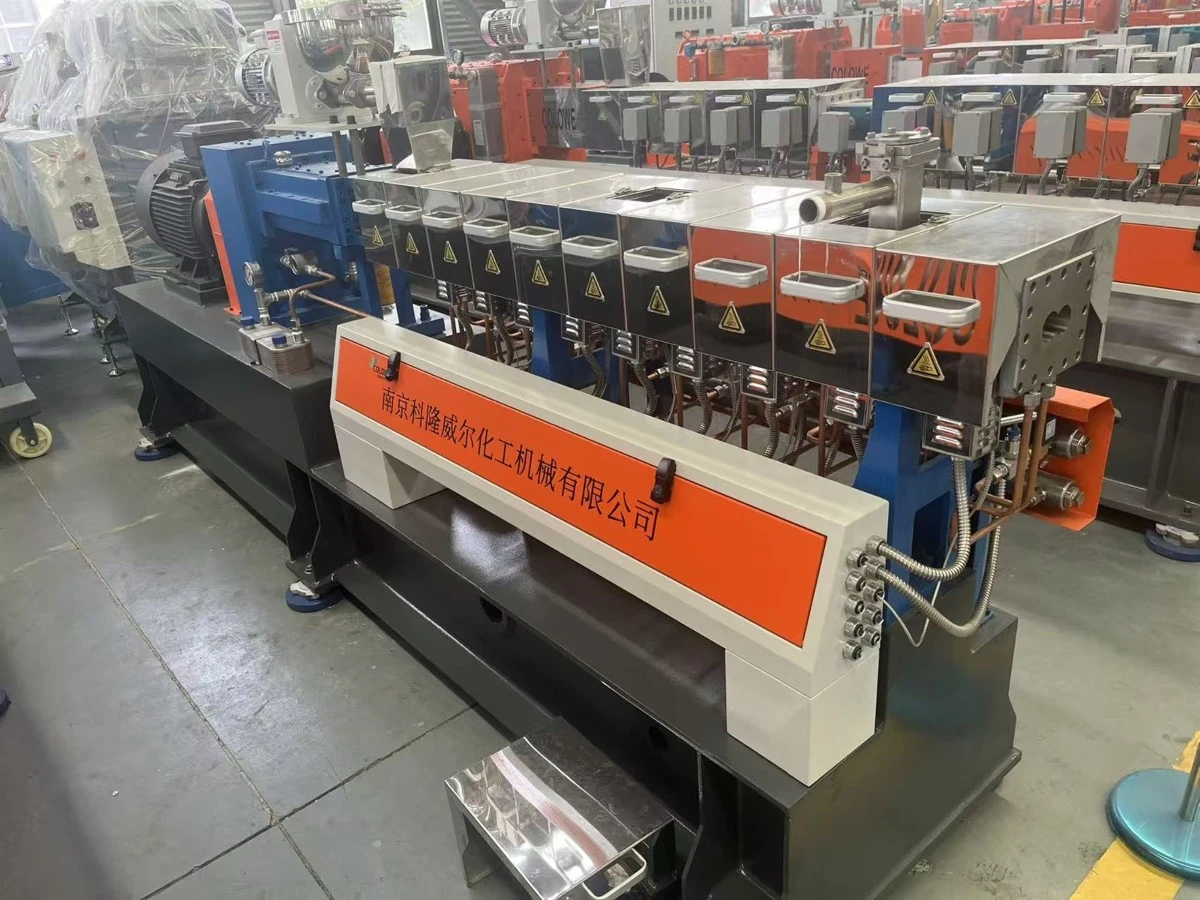
The grade of the masterbatch is ultimately defined by the matching accuracy between the formula and the screw configuration. COLOWE does not promise a "universal machine", but rather breaks down the screw combination, aspect ratio distribution, and torque reserve of each co rotating twin-screw extruder into responses to the logic of filling, coloring, and functional masterbatch formulations. When the "cost-effectiveness" of a high cost-effective extruder is reduced to three verifiable numbers: ton power consumption, formula change time, and first sample pass rate, international customers who are new to masterbatch manufacturing will no longer receive an isolated plastic extruder, but a process baseline that can continuously evolve with formula upgrades.