

Introduction To Several Important Principles Of Plastic Extrusion---Part 1
1. Mechanical Principles
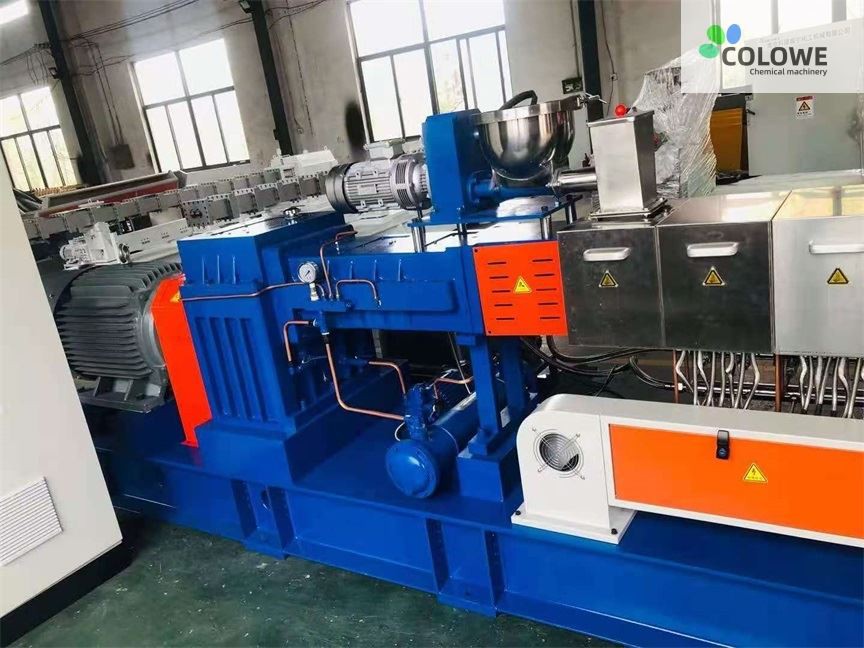
The basic mechanism of extrusion is very simple-the screw rotates in the barrel to push the plastic forward. The screw is actually an inclined plane or inclined plane, wound on the center layer. The purpose is to increase the pressure to overcome greater resistance. As far as the extruder is concerned, there are three resistances that need to be overcome: the friction of solid particles (feeding) on the barrel wall and the friction between them during the first few turns of the screw (feeding zone); the melt is on the barrel wall The adhesion; the internal flow resistance of the melt as it advances.
Newton once explained that if an object does not move in a certain direction, then the force on the object is balanced in that direction. The screw does not move axially, although it may quickly rotate laterally around the circumference. Therefore, the axial force acting on the screw is balanced. If it exerts a large forward thrust on the plastic melt, it will also exert the same backward thrust on the object. Here, the thrust it exerts acts on the thrust bearing behind the inlet.
Most single screws are right-handed threads, such as screws and bolts used in woodworking and machinery. If you look at them from behind, they will turn in the opposite direction, because they must do their best to turn out of the cylinder. In some twin-screw extruders, two screws rotate in opposite directions in two cylinders and cross each other, so one screw must be right-handed and the other screw must be left-handed. In another type of bite twin screw, the rotation direction of the two screws is the same, so their directions must be the same.
However, in both cases, there are thrust bearings to absorb the opposing force, and Newton's principle still applies.
2. Thermal principle
Extrudable plastics are thermoplastics-melt when heated, and solidify again when cooled. Where does the heat from the melting of plastic come from? Feed preheating and barrel/mold heater may work,
It is important when starting, but the motor input energy-the frictional heat generated in the barrel when the motor rotates the screw to overcome the resistance of the viscous melt-is the most important heat source for all plastics, small systems, low-speed screws
Except rods, high temperature plastics and extrusion coating applications.
For all other operations, it is important to realize that the cartridge heater is not the main heat source in the operation and therefore has a smaller impact on extrusion than we expected (see Principle 11). The rear barrel temperature may still be important because it affects the cogging or solids conveying speed in the feed. The temperature of the die and mold should usually reach or be close to the required melt temperature, unless it is used for special purposes such as glazing, fluid distribution or pressure control.
3. Deceleration principle
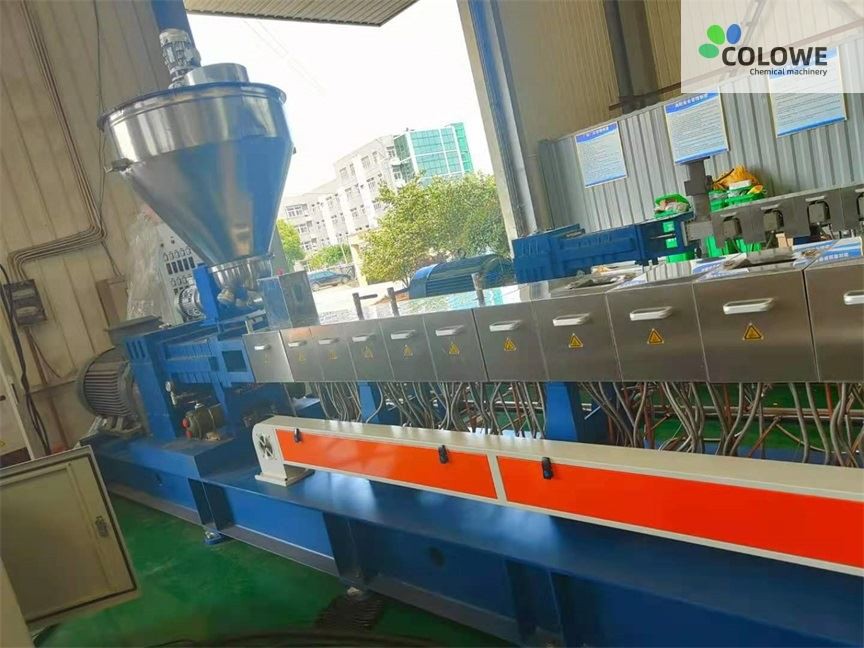
In most extruders, the screw speed is changed by adjusting the motor speed. The motor usually rotates at full speed around 1750 rpm, but this is too fast for the extruder screw. If it rotates at such a high speed, it will generate too much frictional heat, and the residence time of the plastic is too short to prepare a uniform and well-stirred melt. The typical reduction ratio is between 10:1 and 20:1. In the first stage, both gears and pulley blocks can be used, but in the second stage, gears are used, and the screw is located in the center of the last large gear.
In some low-speed machines (such as UPVC twin-screw), there may be three deceleration stages, and the maximum speed may be as low as 30 rpm or lower (a ratio of 60:1). At the other extreme, some very long twin screws used for mixing can run at 600 rpm or faster, and therefore require very low deceleration rates and a lot of deep cooling.
Sometimes the deceleration rate does not match the task-too much energy cannot be used-and it is possible to add a pulley block between the motor and the first deceleration phase that changes the maximum speed.
The above-mentioned domestic steel company representatives told reporters that domestic steel companies “love and hate” Indian iron ore imports: domestic small and medium-sized steel companies do not have the position to negotiate with international iron ore export giants such as BHP Billiton, so they can only buy spot iron from the market. Iron ore meets the demand for iron ore, and India has a complete range of iron ore varieties and grades, suitable for use by various domestic small and medium-sized steel companies. Therefore, Indian iron ore has played a certain role in alleviating the tension in domestic iron ore demand. .
However, Indian iron ore follows the international long-term agreement, and the price of iron ore has risen sharply, making the spot price of iron ore almost twice the price of the long-term agreement. Indian iron ore spot prices remain high, making long-term agreement suppliers dissatisfied with the low-cost supply of iron ore, which further urges them to increase the price of iron ore exported to China. This will either increase the screw speed above the previous limit or reduce the maximum speed to allow the system to operate at a greater percentage of the maximum speed. This will increase the available energy, reduce the current, and avoid motor failure. In both cases, the output may increase, depending on the material and its cooling needs.