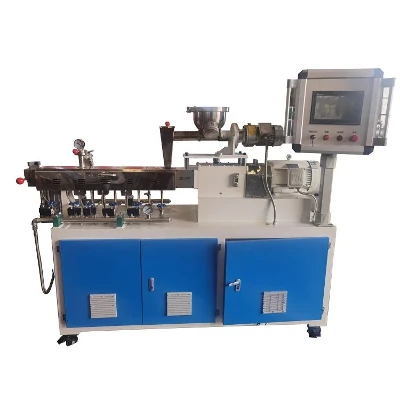
Twin Screw Extruder Heating System: How Efficient Temperature Control Shapes The Future Of Plastics
In the plastics processing industry, the double screw extruder is the key equipment, and its performance directly affects the product quality and production cost. As the "heart" of the extruder, the heating system is far more than simply raising the temperature.
Precise temperature control has become a core factor affecting the degree of material plasticity, energy consumption indicators and final product performance. Especially in the context of increasingly strict environmental protection regulations in the global plastic industry and rising energy costs, the technical selection and optimization of heaters are especially important.
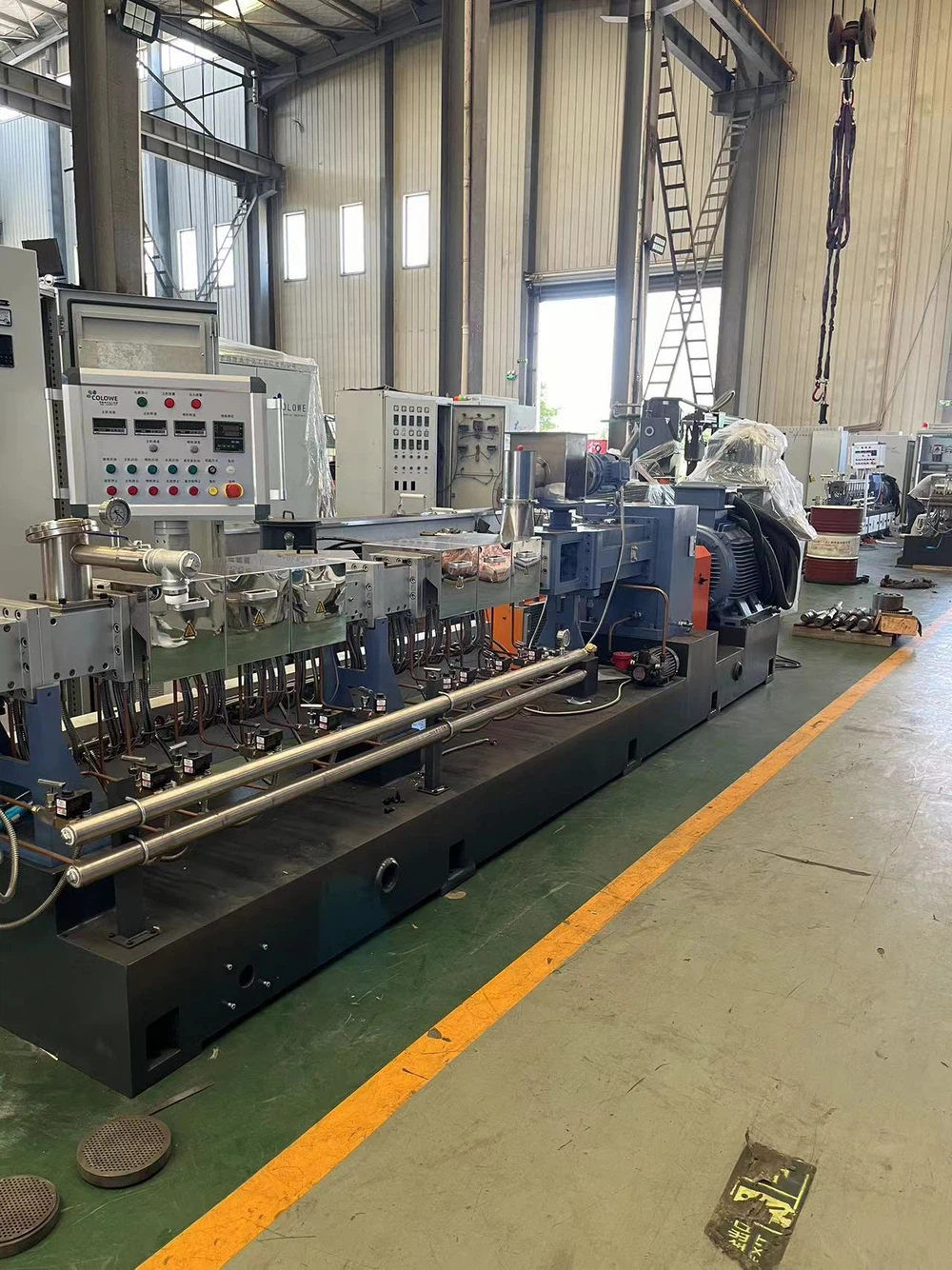
1. Working principle of twin screw extruder and importance of temperature control
The twin screw extruder generates shear force through the rotation of two mutually engaged screws, so that the plastic material is fully plasticized, mixed and finally molded through the mouth die. This process has very demanding requirements for temperature control.
Too high temperature may cause thermal decomposition of materials and change the characteristics of raw materials, resulting in scrap of finished products; Too low temperature will make the extrusion outlet not smooth, resulting in excessive load on the front-end extrusion mechanism.
Based on the thermoplastic properties of materials, the twin screw extruder is no longer limited to the molding and mixing of polymer materials, and its use has been expanded to food, feed, explosives, building materials, packaging and ceramics and other fields.
2. Analysis of Action Range of Heater in twin screw Extruder
Basic functions of heater
In the twin screw extruder, the main function of the heater is to heat the machine from room temperature to the working temperature required for plastic melting before starting the machine.
Different plastic raw materials have their own melting temperature ranges, which require heaters to provide accurate and stable temperature control.
Based on the research, in the preheating link, the energy consumption of the heater accounts for 94.5% - 95.3% of the total energy consumption, which indicates that the energy efficiency of the heating system directly determines the energy consumption level of the whole machine.
Differential demand for temperature control in each zone
The twin screw extruder is usually divided into several temperature zones, and each temperature zone has different requirements for the heater:
-Feeding section: this area requires preliminary heating of the plastic and delivery to the compression section. At this stage, the plastic is in solid state, and the temperature shall be controlled to avoid blockage caused by premature fusion of materials.
-Compression section: extrude and shear materials to melt them. The accuracy of temperature control in this area directly affects the plasticizing quality of the material.
-Homogenization section: further stir and plasticize the materials with uniform plasticization, and extrude the materials through the die at a fixed volume and pressure.
Modern high-performance twin screw extruder usually adopts multi-zone independent temperature control system. Taking AI-808 artificial intelligence regulation algorithm as an example, it adopts fuzzy rule for PID regulation. When the error is large, it adopts fuzzy algorithm for regulation. When the error is small, it adopts improved PID algorithm for regulation.
3. Type and technical development status of heater
Main Stream Heater Types and Characteristics
At present, the twin screw extruder mainly adopts the following heaters:
Barrel heater: it can complete the temperature rise of extruder in a very short time, the maximum heating temperature can reach 450 ℃, and the counter-flow cooling can be realized with the cooling flow channel design.
Far infrared radiation electric heater: silicon carbide far-infrared technology is adopted, characterized by fast temperature rise and uniform temperature distribution, which is more energy-saving than ordinary electric heating mode. The matched automatic temperature control system can realize any temperature control from normal temperature to 850 ℃.
Electromagnetic induction heater: focus on electromagnetic induction heating technology, multi-stage electromagnetic field design can realize all-around and uniform heating of large workpieces, effectively eliminate local overheating problems, temperature control accuracy is ± 2 ℃, energy saving is 35% compared with traditional heating methods.
Latest Progress of Temperature Control Technology
Modern temperature controller adopts intelligent PID parameter self-tuning function and supports heating and cooling double output function, which is more suitable for temperature control of plastic extruder.
Taking AI series instrument as an example, its artificial intelligence regulation algorithm combines PID regulation, self-learning and fuzzy control technology to realize self-regulation/self-adaption function and precise regulation without undershoot. Its performance is far better than that of traditional PID regulator.
These technological advances have significantly improved the temperature control accuracy and energy efficiency of twin screw extruder.
4. Heater selection and energy efficiency optimization strategy
Key Factors Affecting Heater Energy Consumption
The experimental data show that the energy consumption distribution of the twin screw extruder is influenced by a variety of operating parameters:
-Set temperature of cylinder: as the set temperature rises, the specific energy consumption of the unit and the specific energy consumption of the heater decrease by 56.9%.
-Feeding rate: the feeding rate increases from 30r/min to 50r/min, the specific energy consumption of the unit decreases by 33.3%, and the specific energy consumption of the heater and the main motor decreases by 45.9% and 21.6% respectively.
-Screw speed: at a given feeding rate, the screw speed increases from 380r/min to 440r/min, the overall specific energy consumption of the unit decreases by 10.3%, and the specific energy consumption of the heater decreases by 20.4%.
Core considerations for heater selection
When selecting heater for twin screw extruder, the following factors shall be taken into consideration:
-Temperature control accuracy: it is required that the control temperature shall not exceed ± 2 ℃ of the set temperature.
-Heating efficiency and uniformity: avoid material degradation caused by local overheating.
-Energy efficiency performance: high-efficiency heating system can significantly reduce operating costs.
-Cooling capacity: the cooling speed of the plastic equipment is very slow, so an efficient cooling system is required to cooperate with the heating system.
5. Impact of Environmental Regulations and Market Trends on Heater Technology
Increasingly stringent environmental regulations
In recent years, global attention to plastic sustainability is driving the evolution of regulations in countries. Japan and Korea have successively issued important regulatory updates for recycled plastics.
Japan's Ministry of Economy and Industry issued a design certification standard based on the Law on Promoting the Recovery of Plastic Resources, which requires that from January 24, 2026, for colourless PET beverage bottles, the rPET content should be at least 15%.
The Ministry of the Environment also revised the Executive Order of the Resource Recovery Act, which imposes mandatory requirements on the recycled material content in PET beverage bottles, and the first phase (starting from 2026) must use at least 10% recycled PET, which needs to be increased to 30% by 2030.
Market Trends and Data Outlook
Based on the research and statistics of QY Research, the global market sales of twin screw extrusion production lines are expected to continue to grow in 2031.
Meanwhile, with the gradual slowdown of global tariff barriers, China's plastic products industry is showing a mild recovery trend. Recent data show that the domestic plastic product output has been slightly increased on a year-on-year basis, and export orders of some terminal products show a growth trend.
6. Twin screw extruder heater FAQs
Analysis of common doubts in heater selection
Q: How do I judge the energy efficiency performance of the twin screw extruder heater?
A: Several key indicators need to be paid attention to in evaluating the energy efficiency of the heater: the proportion of heating energy consumption in the preheating stage (the high efficiency system is usually within the range of 94.5% - 95.3%), the ratio between heating energy consumption in the heating stage and the set temperature of the cylinder, and the heat loss control in the insulation stage. High-efficiency heater can significantly reduce the heat loss caused by convection heat exchange in the insulation stage.
Q: What special considerations do heaters need to take into account for processing recycled plastics?
A: When processing recycled plastics, the heater needs a wider temperature adjustment range and more accurate temperature control capability. Due to the complex composition and possible impurities of recycled plastics, their melting characteristics are often inconsistent and heaters are required to respond quickly to temperature changes. At the same time, uniformity of the heater temperature distribution is essential to avoid local overheating, considering the possible higher risk of degradation of recycled plastics.
Q: How do I optimize the heater configuration to reduce the energy consumption of the twin screw extruder?
A: The optimization strategy includes: reasonably set the temperature of each temperature zone to avoid excessive high temperature; Increase feed rate to reduce heating time per unit mass of material; Maintain heaters regularly to ensure good heat transfer; New high-efficiency heaters such as far-infrared or electromagnetic induction technology can save 30% - 35% energy compared with traditional methods.
Q: What product quality problems can be caused by inaccurate heater temperature control?
A: Inaccurate temperature control may lead to various defects: too high temperature will cause thermal decomposition of materials and change the characteristics of raw materials, resulting in scrap of finished products; Too low temperature will lead to uneven plastification of materials and decline of mechanical property of products; Temperature fluctuations can cause extrusion stability problems and affect product dimensional consistency.
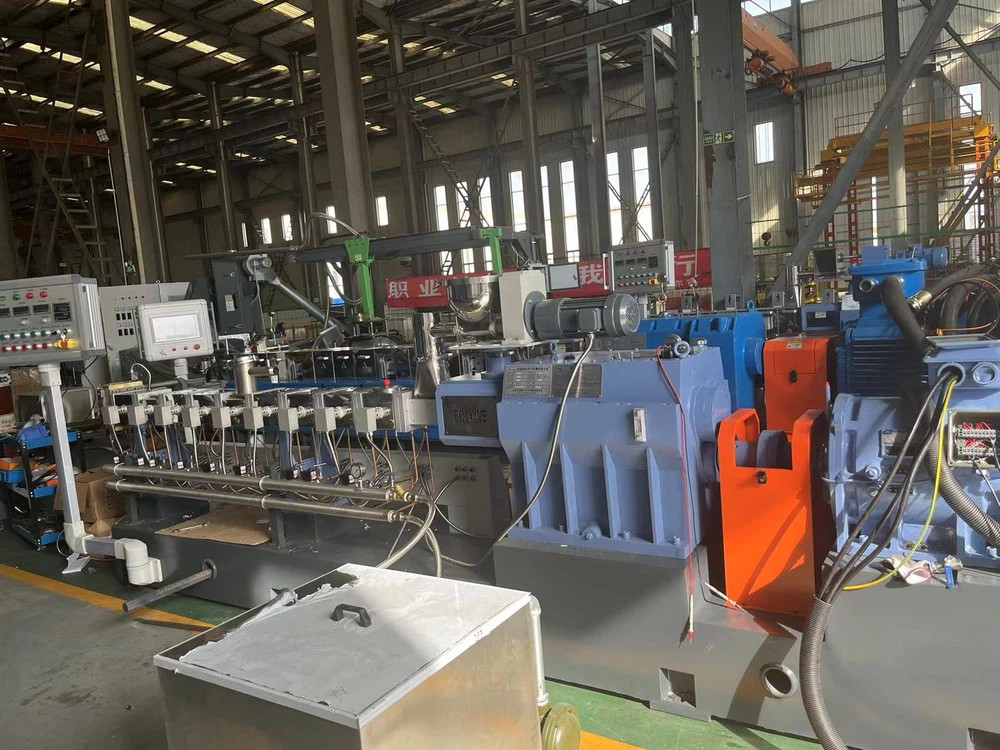
With the transformation of the global plastic industry to the circular economy, the use proportion of renewable plastics continues to increase, and the requirements for the heating system of twin screw extruder will also be increased day by day. Only by grasping the three core elements of accurate temperature control, energy efficiency optimization and environmental protection compliance can enterprises maintain competitive advantages in the global plastic processing field.
In the next few years, innovations in heater technology will focus more on energy efficiency, temperature control accuracy, and adaptability to meet increasingly complex processing materials and production process requirements.