

Why 2026 Is About Twin-Screw Efficiency, Not Just Output
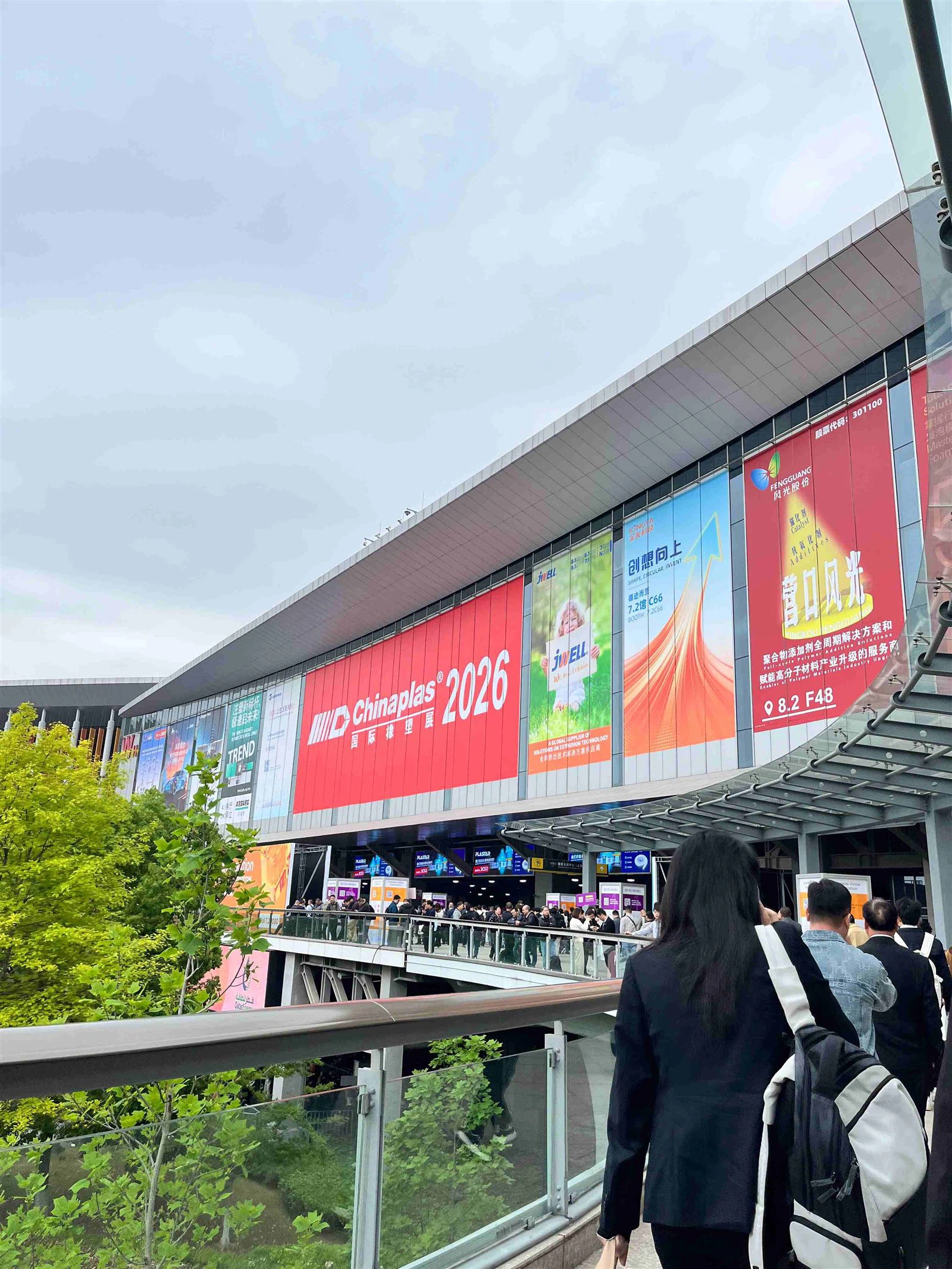
Twin-Screw Granulation in May 2026: Why Manufacturers Are Rethinking Efficiency, Not Just Throughput
The conversation in plastics manufacturing is shifting. For years, extrusion equipment buyers led with a single question: "How many kilograms per hour can this line produce?" Today, in May 2026, the dialogue has grown more nuanced. Plant managers and procurement teams are asking about energy consumption per kilogram, predictive maintenance capability, and the true cost of ownership across a machine's lifecycle. These are no longer "nice-to-have" checkboxes - they are the fundamentals of staying profitable in a market where resin prices remain volatile and carbon accounting is becoming standard practice across global supply chains.
This change in mindset is not accidental. Several forces are converging to reshape what buyers expect from a twin-screw extruder granulator: the continued tightening of environmental regulations in key markets, the growing share of recycled and bio-based feedstocks in production lines, and a structural shortage of skilled operators capable of managing increasingly complex compounding processes. These pressures are driving equipment innovation at a pace the industry has not seen in a decade.
When Coperion exhibited its ZSK 58 Mc18 at Chinaplas 2026 earlier this year, the machine's headline figure - a specific torque of 18 Nm/cm³ with throughputs reaching 2,500 kg/h - was impressive, but what drew sustained attention from technical visitors was something else. The extruder ran with a transparent process section that allowed attendees to observe its mixing and dispersing behavior in real time. The company also introduced a Lifecycle Manager function within its C-Beyond digital platform, designed to compute upcoming maintenance and repairs based on actual operating hours rather than fixed intervals-1-12. The message was clear: transparency and predictability are becoming selling points in their own right.
Similarly, Chinese manufacturer Useon used the same trade fair to debut its U6 high-torque co-rotating twin-screw platform, which the company claims is the first Chinese-made commercial platform to reach the 18 Nm/cm³ specific torque grade - a performance tier once dominated exclusively by European equipment makers-3. The U6 also integrates an online monitoring system that tracks lubrication quality, bearing vibration, and axial force changes, enabling users to plan maintenance before a fault occurs rather than reacting after a breakdown-3.
These developments reflect a broader industry consensus: the next generation of twin-screw extrusion and pelletizing equipment must deliver higher efficiency, greater process adaptability, and smarter operation - not as separate upgrades, but as an integrated package.
Smart Control and the Operator Gap
One of the quietest but most consequential trends in granulator technology is the accelerating adoption of intelligent control systems. The motivation is practical. Across developed and emerging markets alike, factories report difficulty hiring and retaining operators with deep compounding expertise. In response, extruder manufacturers are embedding control logic that automates what used to require years of hands-on experience.
PLC-based systems with one-touch start/stop and adaptive parameter adjustment are becoming the norm rather than the exception. The goal is to reduce startup waste - Famsun, for instance, recently reported that its upgraded H Series twin-screw extruder can cut startup waste by up to 80% in the pre-conditioner - and ensure consistent pellet quality across shifts, operators, and production batches-. For a manufacturer running multiple grades of engineering plastics or masterbatch on the same line, this consistency directly affects profitability.
High Torque, Modular Screw Design, and the Material Diversification Challenge
The twin-screw extruder is, at its heart, a modular system. Different screw elements - conveying elements, kneading blocks, toothed mixing elements - perform specific tasks depending on the material formulation and process requirements-. The art of screw configuration lies in matching these elements to the thermal sensitivity, viscosity profile, and filler loading of a given compound.
In 2026, the push toward higher specific torque values (13.6 Nm/cm³ and above, with 18 Nm/cm³ becoming the benchmark for premium machines) is enabling deeper screw fill levels and lower melt temperatures during compounding. This is particularly important for the growing number of production lines processing recycled content, where excessive shear can degrade already heat-sensitive materials and compromise mechanical properties.
The material landscape itself is becoming more complex. Single-material production lines are increasingly rare. A typical compounding operation today might process virgin engineering plastics, post-industrial recycled resins, bio-based polymers, and high-filler formulations - sometimes within the same week. Twin-screw equipment must handle this diversity without constant reconfiguration.
Where Experience Meets Innovation
This is where the role of a seasoned technical team becomes genuinely important. Equipment specifications and cutting-edge screw geometries are essential, but they only deliver results when combined with process know-how developed over years of real-world applications. Nanjing Kelongwell Chemical Machinery Co., Ltd. (COLOWE) has built its reputation on precisely this combination. The company's technical team brings 23 years of industry experience to the design, manufacturing, and commissioning of twin-screw and triple-screw extrusion equipment, covering everything from co-rotating and counter-rotating compounding lines to continuous internal mixer systems for demanding applications.
COLOWE operates from its headquarters in Nanjing, employing a team with extensive experience in the extruder industry, and exports equipment to more than 50 countries including Japan, Indonesia, Malaysia, Singapore, Australia, and markets across the Middle East-40. Early 2026 saw the completion of a major new manufacturing plant - a strategic investment aimed at scaling production capacity while maintaining precision manufacturing quality-43. More recently, the company has shipped new COLOWE-65 series twin-screw extruders to overseas customers, with models undergoing rigorous pre-delivery inspection and export-standard packaging-.
For international buyers evaluating granulation equipment in 2026, the key lesson from industry events and operator feedback alike is clear: the specification sheet matters, but not in isolation. A high-torque screw geometry only delivers its promised efficiency gain if it is correctly configured for the actual feedstock being processed. A PLC system only saves money if its parameters are tuned to the real thermal and rheological behavior of the material. This is the kind of insight that comes from hands-on project experience - the kind accumulated not in months, but in decades.
Looking ahead, the twin-screw granulator market will continue to evolve. Higher specific torque, smarter process control, and better energy efficiency will remain central themes. But the manufacturers who thrive will be those who pair advanced hardware with genuine process expertise.
one-stop solution
professional team
high quality


