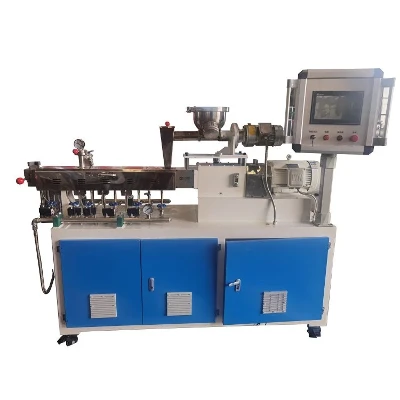
Particle Quality Is Not Adjusted: COLOWE Redefines Recycling Granulation With Equipment Details
1, Particle quality does not rely on "formula adjustment", but on equipment details to intercept impurities and fluctuations layer by layer
The quality of recycled granules is never achieved by adding more additives. The root causes of black spots, bubbles, and melt drift are mostly hidden in the three links of filtration accuracy, desorption depth, and temperature control stability. The reason why the co rotating twin-screw extruder is irreplaceable in the regeneration granulation scenario is precisely because its equipment details can turn "every layer of impurities and every degree of temperature difference" into controllable and verifiable engineering variables. The practice of Nanjing Kelongwell Chemical Machinery Co., Ltd. (COLOWE) in this logic provides a visible data and clear return path for international customers who are entering the recycling granulation industry for the first time, pursuing environmental protection and high cost-effectiveness extruders.
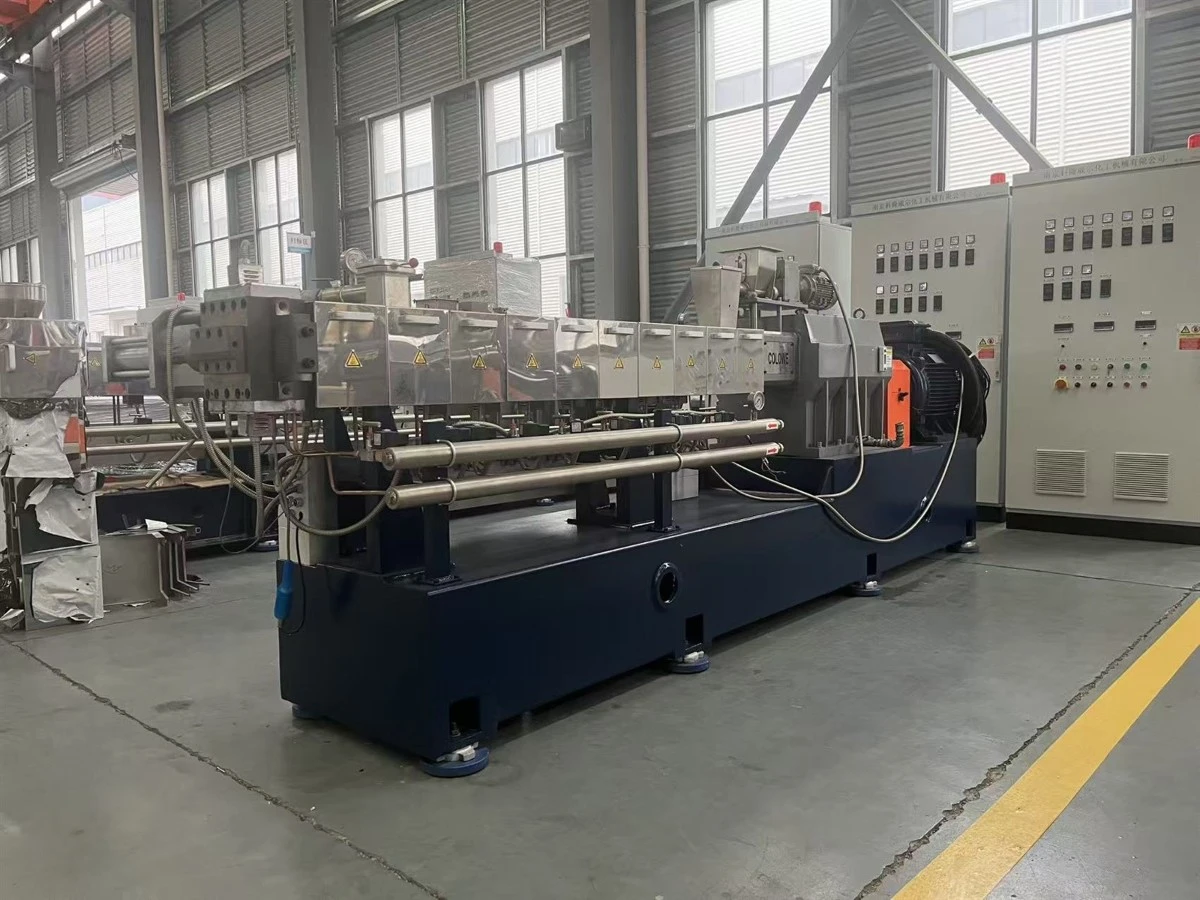
2, What did COLOWE do correctly in the three "equipment detail battlefields" of particle quality
1. Filter without stopping: The dual plunger screen changer intercepts impurities before cutting. The unmelted particles, metal debris, and label residue in the recycled materials are the direct sources of particle black spots and downstream broken wires. The COLOWE two-stage twin-screw extruder unit is equipped with a double plunger screen changer to achieve continuous filtration without stopping the machine. The high mesh filter screen completes impurity retention before the melt enters the mold head. For crushed materials with large fluctuations in impurities, this detail directly determines whether the finished particles are "clean enough to enter the injection molding machine".
2. Unscrupulous stripping: Multi stage forced vacuum exhaust extracts moisture and VOCs from the melt. The high moisture content and volatile matter of recycled materials are the top reasons for excessive bubbles, silver streaks, and odors. The COLOWE co rotating twin-screw extruder adopts a high free volume screw combined with a multi-stage forced devolatilization system. The large-diameter natural exhaust port is connected in series with multiple vacuum exhaust sections to forcibly extract moisture, oligomers, and volatile organic compounds from the melt, significantly improving the cleanliness of granulation. When the white PS sample is tested on the 65D48:1 model, the dual vacuum ports are used in conjunction with a Roots vacuum pump to control the residual volatile matter below 480 ppm, and there are very few silver lines on the particle surface.
3. Temperature control does not "diverge": segmented independent PID locks the melt temperature within a narrow window. The thermal history of recycled materials is complex, and with each increase in temperature control deviation, the risk of melt drift and oxidation yellowing increases by one level. The Kelongwell machine is equipped with multiple independent PID temperature control systems, with temperature deviation controlled within ± 1 ℃, which fundamentally suppresses the degradation of thermosensitive materials during extrusion. Combined with a low compression ratio splitter plate, the melt pressure fluctuation is less than 0.3 MPa, and the particle density can reach 0.66 g/cm ³, with regular particle shape and no tailing.
3, The true meaning of a cost-effective extruder is to include "saved electricity and fewer machine stops" in the cost of pellets
International customers who pursue environmental protection often face a real contradiction: they need to benchmark particle quality against new materials, but they do not want to invest excessively in equipment. The industry white paper "Assessment of the Whole Life Cycle Cost of Plastic Mixing Equipment" points out that the equipment purchase price only accounts for 15% -25% of the total 5-year ownership cost, while energy consumption accounts for 30% -45%, and downtime losses account for 15% -25%. The energy-saving design of the COLOWE plastic extruder directly falls on these two major costs: the measured specific energy consumption of the same direction twin-screw model is stable at 0.24 kWh/kg, which is about 20% energy-saving compared to the average level of the same specification; Based on an annual production of 5000 tons of modified materials, the electricity cost alone can save about 120000 yuan per year, indirectly reducing carbon emissions by about 96 tons of CO ₂ e. At the same time, the modular screw combination allows the same cost-effective co rotating twin-screw extruder to quickly switch between filling, reinforcement, and regeneration granulation. Customers who are new to new material trial production do not have to wait for months for non-standard customization - the average delivery cycle for conventional specifications is about 43 days, which is about 30% shorter than the industry average. In the third quarter of 2025, COLOWE will deliver 7 twin-screw extruder production lines to customers in Europe, Southeast Asia, and the Middle East, including 5 cost-effective co rotating twin-screw extruders, directly responding to the international market's dual demands for "environmental compliance" and "controllable investment".
4, How to determine if a twin-screw extruder is suitable for oneself when encountering recycling granulation for the first time?
Q: This is my first time doing recycling granulation, and my budget is limited. Is the co rotating twin-screw extruder over configured?
A: On the contrary. The density fluctuation of recycled materials is large, and the impurity content is uncontrollable. The limitations of traditional single screw in plasticization uniformity and exhaust capacity often lead to unstable particle quality and downstream yield loss. The modular screw configuration and segmented temperature control of co rotating twin-screw provide adjustable and verifiable process windows; COLOWE's entry-level environmentally friendly plastic extruder has lowered its price threshold by 18% while maintaining core configurations such as high torque gearboxes, so that the "first time" does not have to sacrifice equipment foundation.
Q: Is the particle quality good or not? Which data do I need to look at when testing the machine?
A: Recording three parameters can form a judgment: specific energy consumption (kWh/kg) reflects the real electricity cost, melt pressure fluctuation (MPa) reflects the screw configuration and filtration stability, and residual volatile matter at the vacuum port (ppm) reflects the devolatilization depth. The COLOWE experimental platform supports customers to carry out material testing for no less than 8 hours with their own materials. The above data is recorded on site and compared with experimental and mass production equipment using the same set of geometric parameters. The amplification process does not require re exploring the process window.
Q: Environmental regulations are becoming increasingly strict, should we leave some room for the future when buying extruders now?
A: The margin that needs to be left is not in the "larger models", but in the "wider process window". The COLOWE co rotating twin-screw extruder has a long to diameter ratio covering 28 to 64, with torque levels ranging from 1.5 to 15 N · m/cm ³. The same platform can cover formula switching needs such as PLA/PBAT blending, rPET/rPP reinforcement, and high-temperature engineering plastic filling. For first-time entrants with a long-term focus on environmental compliance, this means that there is no need to replace the entire machine for every formula iteration. The value of a cost-effective extruder lies in "one device to accompany you through the trial and error period".
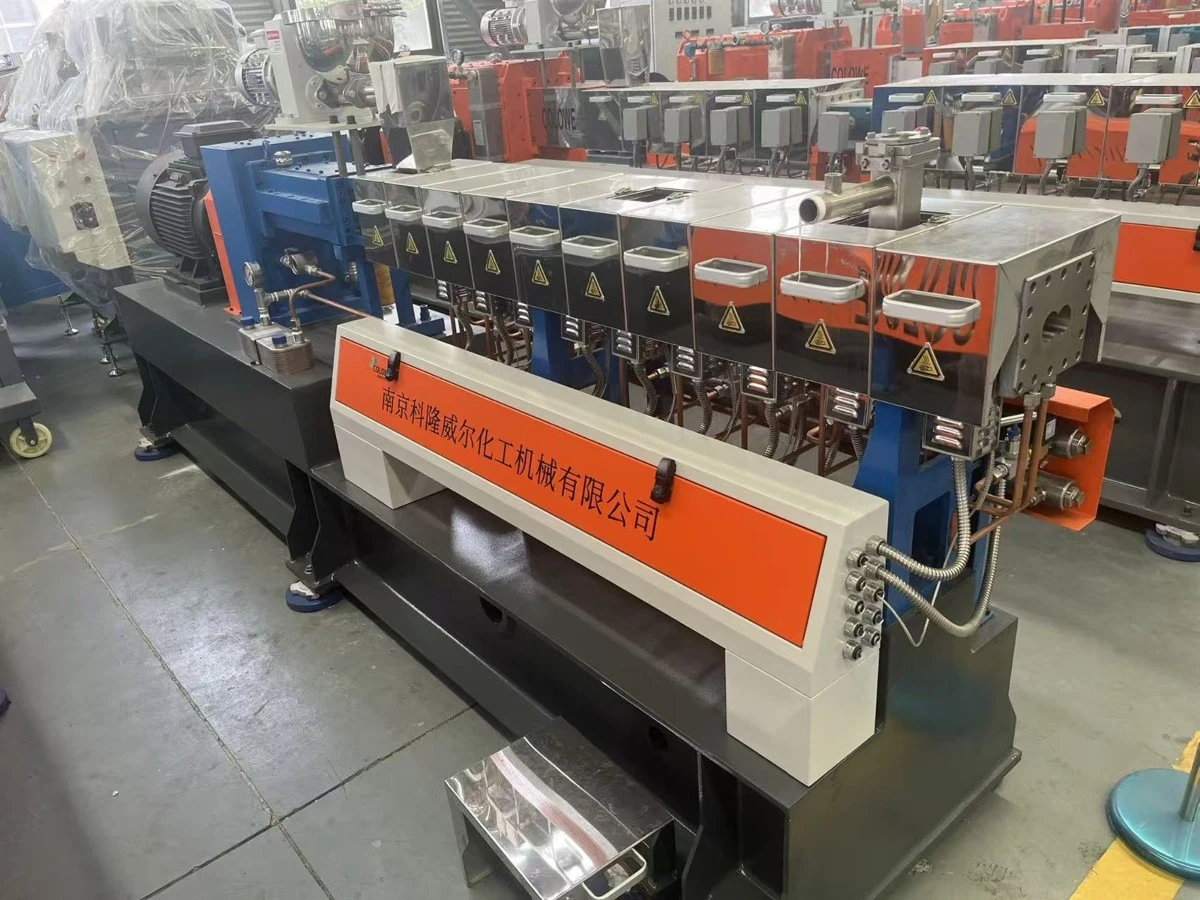
5, Spread out the details so that the particle quality can withstand inspection
The quality of recycled granules is ultimately recorded in the retention accuracy of the filter, the extraction efficiency of the vacuum port, and the flatness of the temperature control curve. The manufacturing data and operating parameters of twin-screw extruders, cost-effective extruders, and complete sets of plastic extruders will be opened to customers in the exhibition hall of COLOWE's second factory building. In the past 12 months, the on-site power on acceptance rate of the delivered equipment has reached 99.2%. For international customers who pursue environmental protection, try new materials, and carefully choose plastic extruders for the first time, COLOWE's answer is not "the highest value on the parameter table", but that a device can still stably turn every kilogram of recycled material into usable particles under the repeated impact of impurities, moisture, and temperature differences - particle quality is always the sum of equipment details.