

What Are The Advantages Of The COLOWE Twin-screw Extruder? A Full Lifecycle Ledger Of A Cost-effective Extruder
When the core obligations of the EU PPWR officially come into effect in August 2026 and CBAM carbon costs begin to be embedded in the plastic supply chain, the first practical problem faced by international buyers is: which line of the quotation should the money be spent on for the first plastic extruder. The global twin-screw extruder market is expected to grow from 3.37 billion US dollars in 2026 to 5.13 billion US dollars in 2034, with a compound annual growth rate of 5.38%, with the increase concentrated in the blending of recycled materials and biodegradation modification scenarios. COLOWE's definition of "high cost-effectiveness" is not in the discount column of the purchase price, but in the interval between every kilowatt hour of electricity, every kilogram of materials, and every shutdown on the five-year operating table.
1. Torque to aspect ratio: The foundation of a co rotating twin-screw extruder determines how far it can accompany you
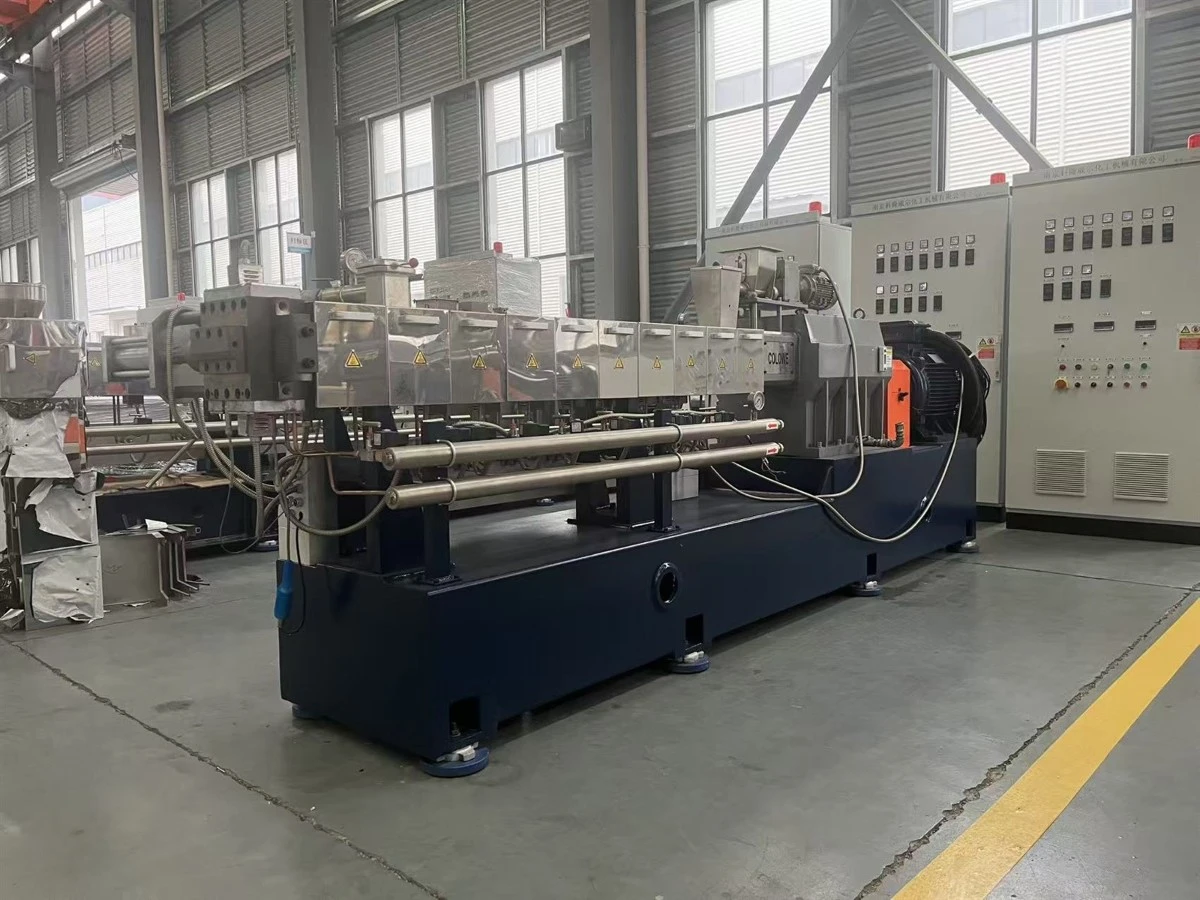
Customers who are new to twin-screw granulation are most likely to be distracted by automation configuration and appearance level during selection. But the mixing quality of co rotating twin-screw extruders is essentially locked by two geometric dynamic parameters: specific torque and aspect ratio. The COLOWE 65D co rotating twin-screw extruder maintains a 48:1 aspect ratio and 11.3 N · m/cm ³ torque ratio, which means that when the formula switches from low filling to calcium carbonate filling PP up to 60%, the equipment does not need to be retired prematurely due to insufficient shear capacity. The relative velocity and high shear generated in the meshing area by the co rotating twin-screw provide a distribution and dispersion mixing effect that is difficult to reproduce with a single screw, while the modular screw combination allows the same cost-effective extruder to flexibly switch between PLA/PBAT blending, rPET thickening, and high-temperature engineering plastic filling.
Professional terminology speed reading: The torque ratio determines whether it can be cut open, while the aspect ratio determines whether there is enough time and space to get things done. Both are not prominently displayed on the quotation, but they directly determine whether the equipment can accommodate your formula changes for the next three years.
2. Specific energy consumption 0.24 vs 0.28-0.32: Energy saving is not a selling point, it is an admission condition
According to the statistics of the China Plastics Machinery Industry Association in 2025, the average specific energy consumption of twin-screw extruders of the same specification and direction is 0.28-0.32 kWh/kg, and the actual measurement by Kelongwell is stable at 0.24 kWh/kg, saving about 20% energy. According to a modified plastic production line with an annual output of 5000 tons and an industrial electricity price of 0.8 yuan/kWh, the annual electricity cost difference is about 120000 yuan, corresponding to a reduction of about 96 tons of CO ₂ e in indirect carbon emissions. Industry data from GEP Research further confirms this trend: twin-screw co rotating extruders have achieved a 30% energy efficiency improvement by 2025, and energy efficiency is changing from a "bonus point" to a bottom line condition for entering the target market supplier list. For international buyers who pursue environmental protection, the specific energy consumption data of a plastic extruder can better demonstrate its survival ability under carbon constraints than any certification label.
3. Environmental compliance forced selection: The co rotating twin-screw extruder is the "same equipment" for the trial production of recycled and new materials
In the third quarter of 2026, Kelongwell delivered 7 twin-screw extruder production lines to customers in Europe, Southeast Asia, and the Middle East, including 5 cost-effective co rotating twin-screw extruders used for rPET thickening, PLA/PBAT biodegradation modification, and PE/PP high filling regeneration granulation; During the same period, export orders for cost-effective extruders increased by 41% year-on-year. Behind this flow is a rigid compliance logic: PPWR requires that the recycled content of plastic packaging meet the standards by category by 2030, with a target of 35% for the "other plastic packaging" category. The White Paper on Circular Plastic Processing Technology released by Plastics Europe in 2025 states that the dispersion and mixing efficiency of the co rotating twin-screw extruder determines the degree of mechanical performance recovery of recycled materials. High quality equipment can increase the tensile strength retention rate of recycled PP from 72% to 89%. The dual stage co directional twin-screw production line used by Kelongwell for rPET bottle tablets can increase the IV value from 0.55 dL/g to 0.78 dL/g without crystallization drying, saving 35% energy compared to traditional routes.
For customers who are "trying to make new materials for the first time", this means that the same cost-effective extruder can run new material formulas and also avoid the need to replace the host when the proportion of recycled materials increases. Reproducible stability is the true essence of cost-effectiveness in the era of environmental compliance.
4. The "second payment" that cannot be seen on the quotation: lining, delivery, and test samples
The industry white paper "Assessment of Full Life Cycle Cost of Plastic Mixing Equipment" shows that the equipment purchase price only accounts for 15% -25% of the total 5-year ownership cost, energy consumption accounts for 30% -45%, screw cylinder wear and replacement accounts for 10% -20%, and downtime losses account for 15% -25%. The gearbox of the COLOWE 65D co rotating twin-screw extruder adopts carburizing quenching and gear grinding technology, and the cylinder liner is made of bimetallic centrifugal casting, which has a wear resistance about three times higher than that of nitride steel; A device with an initial quotation that is 15% lower but has a shorter lifespan for the lining, under conditions of fiberglass reinforcement or high mineral filling, may be replaced within two to three years, resulting in cost savings and downtime losses.
In terms of delivery and sample end, the average delivery cycle of conventional twin-screw extruders from COLOWE in the first half of 2025 is 43 days, which is about 30% shorter than the industry average; In the past 12 months, the qualification rate of equipment delivered for one-time power on acceptance reached 99.2%. Before leaving the factory, a material aging test was conducted for no less than 8 hours, and temperature control fluctuations were controlled within ± 1 ℃. For international customers who are new to plastic extruders, the experimental and mass production equipment use exactly the same geometric parameters of screw components, and there is no need to explore the process window again during the amplification process, directly reducing the cost of trial and error materials and time.
5. Key Q&A: The three most concerned questions for international buyers who are new to COLOWE
Q: Should we first consider the price or the specific energy consumption of the first plastic extruder?
Let's first look at the energy consumption. The discount negotiated during procurement negotiations may be swallowed up by the gap between 0.24 and 0.32 kWh/kg in the first year of production. The "cost-effectiveness" of a high cost-effective extruder should be calculated on the five-year operating table, rather than compared on the signing table.
Q: A co rotating twin-screw extruder is more expensive than a single screw extruder. Is it necessary to use twin-screw for the first sample?
If the target involves filling, coloring, blending modification, or the addition of any proportion of recycled materials, the single screw drag conveying mixing ability is insufficient to cover it. The dual function of distribution and dispersion mixing of co rotating twin-screw is the basic guarantee for the consistency of particle performance; The COLOWE 35B model can shorten the equipment payback period to within 12 months with a monthly PP granulation scale of 200 tons.
Q: Does the high cost performance extruder from COLOWE "save things that should not be saved" on the core components?
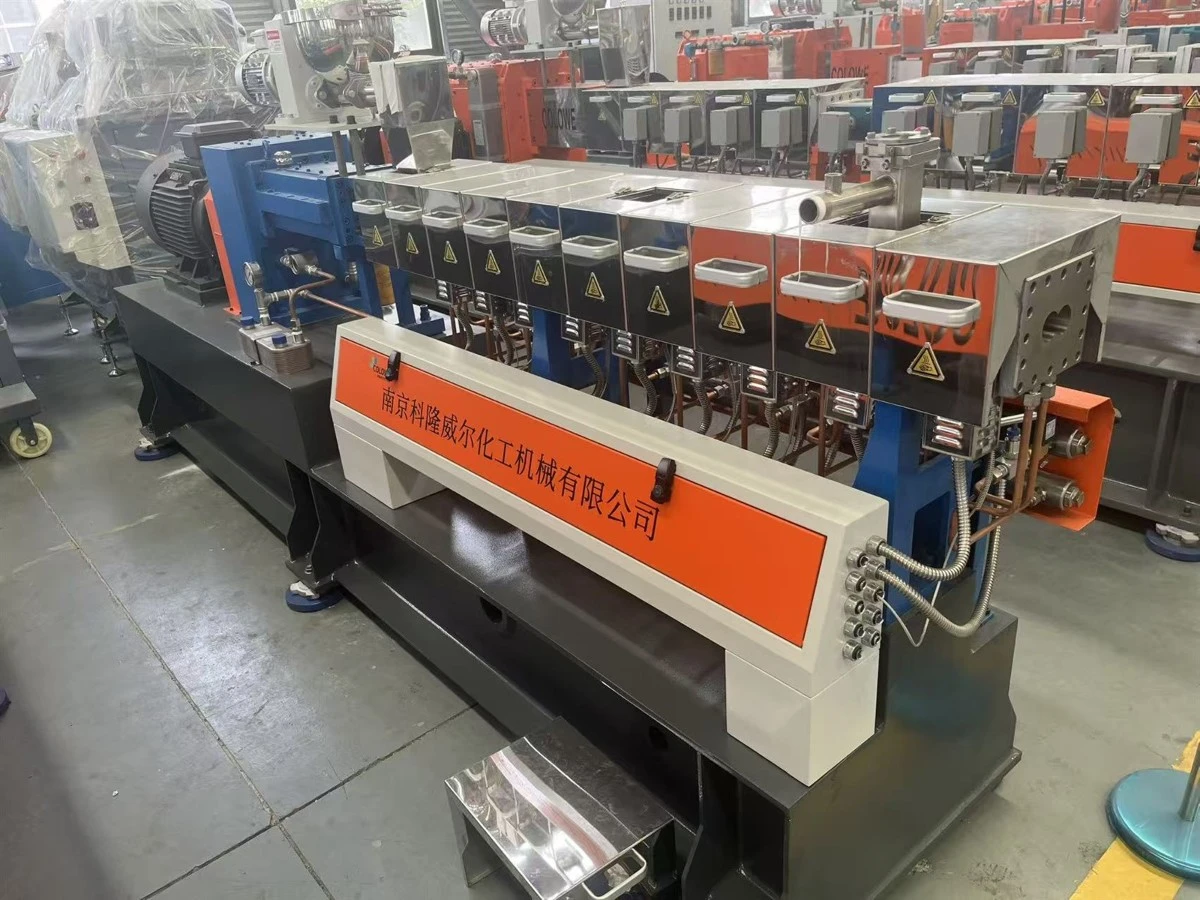
No. The specific torque of the 65D co rotating twin-screw extruder is 11.3 N · m/cm ³, and the gear box carburizing, quenching, and grinding process, as well as the bimetallic centrifugal casting liner, have not been reduced due to price positioning; All core moving parts maintain the same metallurgical standards and machining accuracy as higher configuration models.
At the end: When environmental regulations make "being able to squeeze out" the minimum threshold, a plastic extruder is no longer just a production tool, but a device that determines whether you can enter the recycled material supply chain and maintain profits under carbon costs. COLOWE's understanding of co rotating twin-screw extruders is not about making the parameter table beautiful, but about leaving a measurable return on the five-year ledger for every kilowatt hour of electricity, every kilogram of material, and every start-up. The ultimate goal of a cost-effective extruder is not to buy it cheap, but to use it clearly.
No Information


