

Why Is The Lifespan Of A Good Twin-screw Extruder Getting Shorter And Shorter Now?
Conclusion first: It's not that the equipment has deteriorated, it's that the definition of "good equipment" has been rewritten by the triple forces of environmental regulations, recycled material conditions, and full lifecycle costs. A co rotating twin-screw extruder that was considered "good enough" five years ago may be judged as "end-of-life" in less than a year when it is put on a recycled material production line or high filling formula in 2026. The global twin-screw extruder market is expected to reach a size of approximately 3.2 billion US dollars by 2025 and 5.13 billion US dollars by 2034. However, the increase will no longer come from equipment that can be used, but from system solutions that can extend the lifespan under harsh working conditions. The issue of the lifespan of plastic extruders is essentially a mismatch between the selection logic and the actual working conditions.
1. The first truth behind the shortened lifespan: the working conditions have changed and the equipment has not kept up
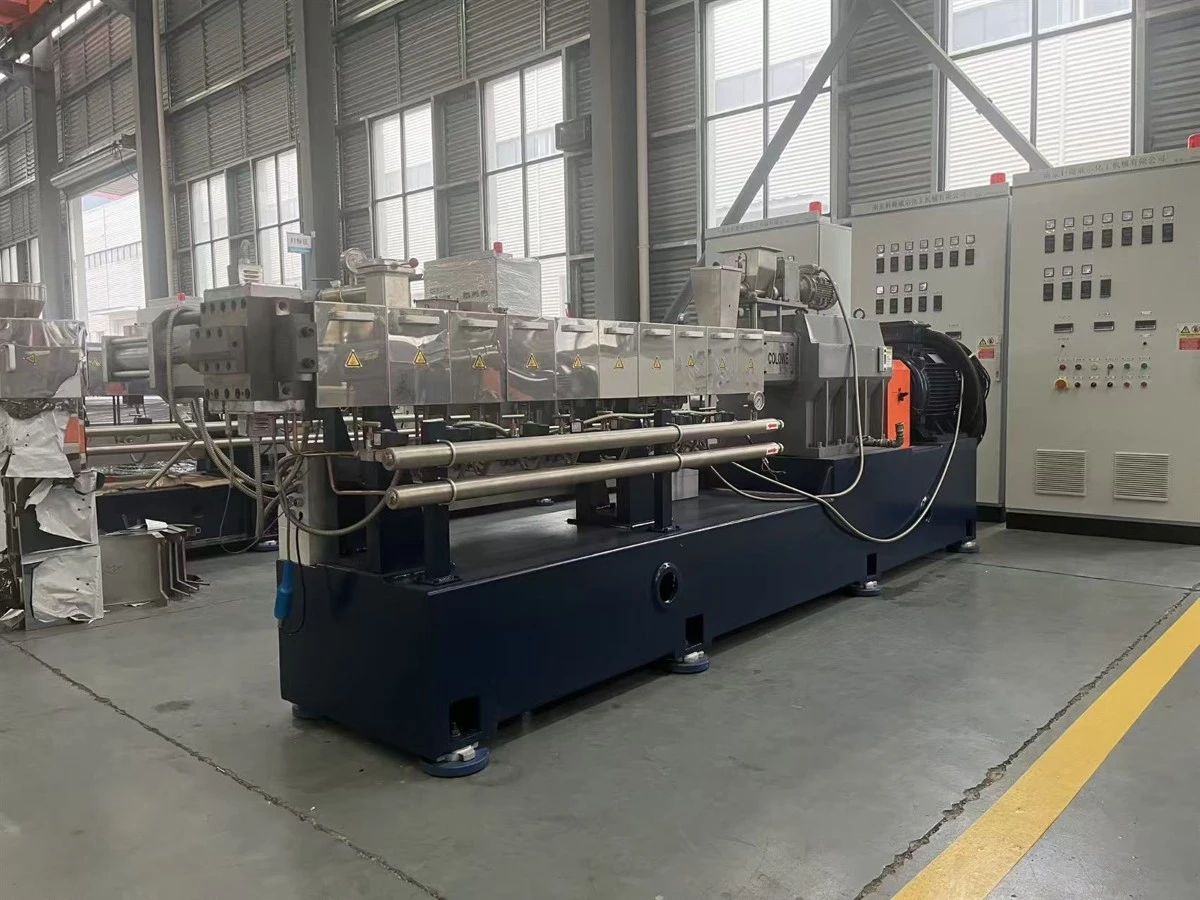
In the past, the evaluation of a co rotating twin-screw extruder was based on whether the gearbox was sturdy and the screw could not rotate. Today's problem lies in the 'contact surface'. The abrasive wear of screw components and barrel liners caused by glass fiber, mineral filling, and the recovery of sand, gravel, and metal debris from crushed materials is continuous and irreversible. According to data from the China Plastics Machinery Industry Association in 2025, glass fiber/mineral reinforced modified plastics account for about 35% of the market. Under such conditions, the actual lifespan of ordinary nitride steel screw components is only 3000-5000 hours. Under high impurity recycling conditions, the contact life may be further shortened to 1500-3000 hours. The more hidden cost is "hidden attenuation": the gap between the screw and the barrel increases due to wear, resulting in a 10% -30% decrease in production and a 15% -40% increase in specific energy consumption. A device that can still operate is actually continuously consuming profits with higher electricity bills and lower yield rates.
2. Second layer truth: EU PPWR is incorporating "life expectancy threshold" into regulations
On August 12, 2026, the European Union's Packaging and Packaging Waste Regulation (PPWR, Regulation (EU) 2025/40) will end its transition period and be universally applicable in 27 member states; By January 1, 2030, the minimum threshold for the recycling content of plastic packaging will be implemented by category. This means that plastic extruders entering the European market can no longer use "performance when processing new materials" as the sole acceptance criterion. Impurities, unmelted particles, and corrosive components in recycled materials are becoming normalized operating conditions. The cost-effectiveness of a high-performance extruder must take into account how long it can last after the proportion of recycled materials increases. The global plastic extruder market is expected to reach approximately $8.42 billion by 2026, with a growth rate of 6.21% for twin-screw extruders, higher than single screw extruders. One of the driving forces behind this is the mandatory requirement for recycled content in Europe and America, which is forcing production lines to shift from single screw extruders to co rotating twin-screw extruders. Choosing the wrong device is not losing a purchase price, but being blocked from the compliant market.
3. Third layer truth: The "second payment" for low-priced equipment is hidden in the lining and gearbox
International buyers who are new to plastic extruders are most likely to make "deductions" on the quotation. But what really determines how long a cost-effective extruder can last is often not in the total price column. The gearbox of the COLOWE 65D co rotating twin-screw extruder adopts carburizing quenching and gear grinding technology, and the cylinder liner is made of bimetallic centrifugal casting, which has a wear resistance about three times higher than that of nitride steel; Under abrasive working conditions, the lifespan difference between bimetallic alloy barrels and nitriding barrels can widen by several times or even an order of magnitude. On the other hand, a device with an initial quotation 15% lower but a significantly shorter liner life may need to face a liner replacement within two to three years, and the downtime losses and replacement costs are enough to recoup all the "saved money". The accurate definition of a high cost performance extruder is to not subtract from the core moving parts, and to reduce the total cost of ownership to an calculable and predictable level.
4. COLOWE's position: Making "lifespan" the starting point of selection, rather than after-sales remedies
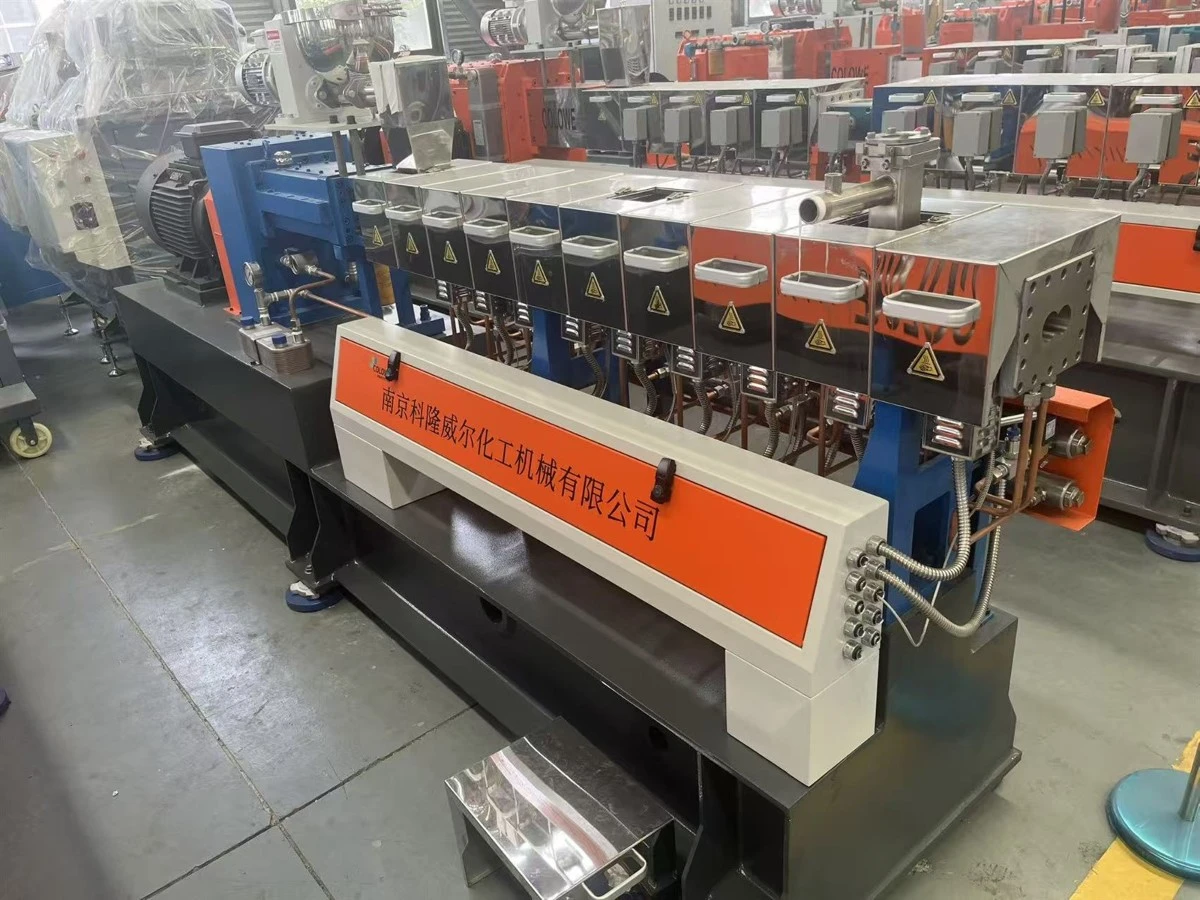
Nanjing Kelongwell Chemical Machinery Co., Ltd. specializes in co rotating twin-screw extruders and whole line solutions, with aspect ratios ranging from 28 to 64 and specific torque levels from 1.5 to 15 N · m/cm ³. It is suitable for PLA/PBAT blending, rPET/rPP regeneration reinforcement, high filling modification and other scenarios. Taking the 65D model as an example, a 48:1 aspect ratio combined with a torque ratio of 11.3 N · m/cm ³ means that when the subsequent formula switches from low filling to high filling, the equipment will not be retired prematurely due to insufficient shear capacity. In terms of energy consumption, the average specific energy consumption of similar co rotating twin-screw extruders according to the statistics of the China Plastics Machinery Industry Association in 2025 is 0.28-0.32 kWh/kg, and the actual measurement by Kelongwell is stable at 0.24 kWh/kg, saving about 20% energy; Based on an annual production line of 5000 tons of modified plastics and an industrial electricity price of 0.8 yuan/kWh, the annual electricity cost difference is about 120000 yuan, corresponding to a reduction of about 96 tons of CO ₂ e in indirect carbon emissions. In the third quarter of 2026, Kelongwell delivered 7 twin-screw extruder production lines to customers in Europe, Southeast Asia, and the Middle East, including 5 cost-effective co rotating twin-screw extruders; In the first half of 2026, the export orders of cost-effective extruders increased by 41% year-on-year. These devices are used for rPET thickening, biodegradation modification, and high filling regeneration granulation - precisely the working conditions where the lifespan is most easily compromised.
5. Key Q&A: The three questions that first-time buyers should ask clearly
Q: How long can a good twin-screw extruder last?
A: There is no unified "number of years". Under the condition of unfilled universal plastic, the reference life of the contact parts is about 8000-12000 hours; Under glass fiber/mineral reinforcement conditions, ordinary nitride steel components can last for about 3000-5000 hours, which can be extended to 7000-9000 hours after upgrading to powder metallurgy or bimetallic liners. The actual lifespan of a co rotating twin-screw extruder is determined by the working conditions, material configuration, and maintenance system, rather than a single number.
Q: I am a first-time buyer for new material trial production. Can I buy a cheap equipment that is "sufficient" first and then replace it later?
A: The risk does not lie in the 'later exchange' itself, but in 'how much hidden cost has already been paid before the exchange'. The decline in production and increase in specific energy consumption caused by wear and tear is gradual. When forced to replace, the overpaid electricity bills, waste losses, and downtime losses often exceed the price difference of the initial purchase. The logic of a cost-effective extruder is to spend money on "life determining nodes" such as gearboxes, bushings, and screw components, rather than on post remediation.
Q: What is the relationship between environmental compliance and extruder lifespan?
A: Directly related. PPWR promotes an increase in the proportion of recycled materials, while impurities and corrosive components in recycled materials accelerate contact wear. A plastic extruder that was designed with a process window and wear allowance for "future use of recycled materials" will still be in service when the threshold is reached in 2030; A device selected based on the pure new material working condition 'stuck at the lower limit' may enter the replacement cycle ahead of schedule. Environmental compliance is not an additional issue, it is already a prerequisite variable for the life calculation of twin-screw extruders.
The lifespan is not 'used', it is basically determined at the moment of selection. For international buyers who pursue an environmentally friendly route and start with new material trial production, putting the wear-resistant configuration, specific torque margin, and full life cycle energy consumption of the co rotating twin-screw extruder before the quotation can better determine the account book three years later than discussing a few percentage points on the signing table. COLOWE's approach is to include these variables in the selection starting point together - because the true "long life" of a cost-effective extruder starts from the first configuration table.


