

PBAT: A Thermoplastic Biodegradable Plastic
Thermoplastic Biodegradable Plastic PBAT (Polybutylene Adipate Terephthalate)
-
PBAT(Polybutylene Adipate Terephthalate): A Thermoplastic Biodegradable Plastic
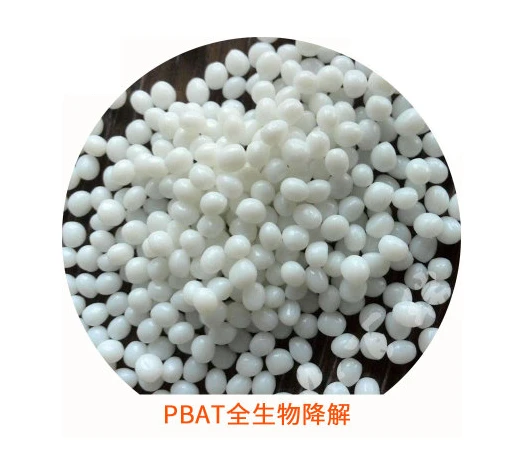
PBAT, a thermoplastic biodegradable plastic, is synthesized through the polycondensation of aliphatic acids (e.g., adipic acid) and butanediol, derived from either petrochemical or bio-based fermentation processes. This material exhibits excellent ductility and elongation at break, alongside commendable mechanical properties such as heat resistance and impact strength. Its superior film-forming capabilities and compatibility with blown film extrusion processes make it an ideal candidate for applications in single-use packaging films and agricultural mulching films. With advantages including cost-effectiveness in petrochemical-based production, mature engineering technologies, and relatively low capital intensity, PBAT is poised to emerge as a dominant biodegradable plastic variant in the foreseeable future, driven by its balanced performance, diverse applications, and scalable manufacturing economics.
-
Technical Development and Global Context
While industrialized PBAT production commenced outside China prior to 2000, domestic efforts were not far behind. Leading Chinese research institutions, including the Institute of Physics and Chemistry (Chinese Academy of Sciences) and Tsinghua University's Chemical Engineering Institute, initiated PBAT industrialization research around the same period. A significant breakthrough was achieved by the Technical Institute of Physics and Chemistry, Chinese Academy of Sciences, leading to the commercialization of domestically developed PBAT production technologies by the early 2010s.Domestic Production Capacity and Leadership
The proliferation of proprietary technologies has enabled China to achieve technological independence in PBAT manufacturing, with some processes now attaining global leadership. As of the latest data, China accounts for 23.5% of global PBAT production capacity. Notably, the majority of ongoing and planned PBAT production projects are concentrated within China, positioning the country to maintain its dominance in global capacity expansion for the foreseeable future. -
Corporate Profile
Nanjing Kelongweier Chemical Machinery Co., Ltd.(COLOWE), with a registered capital of USD 2 million and a production complex spanning over 7,000 square meters, operates as a high-tech enterprise integrating R&D, design, manufacturing, and sales. The company specializes in advanced chemical machinery solutions, supporting the growing demand for sustainable materials like PBAT.


