

How to solve the black spot when granulating?
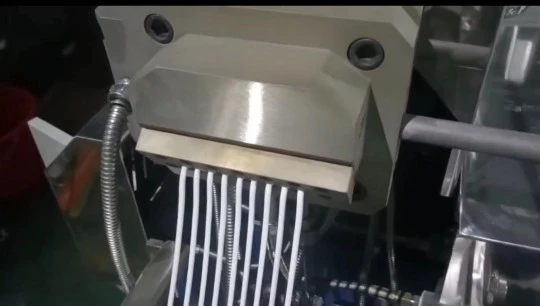
What should we do if black spots appear during granulation in the granulator?
During the granulation process, it is a common problem that black spots appear on the pumped granules.
How to solve this problem? Is this phenomenon caused by a problem with the granulator, raw materials, or other factors?
Now COLOWE will analyze it for everyone.The problem of black spots during the granulation process is a common failure phenomenon, especially in colored and light-colored products. It is often during the final large-scale production process that it is found that there is no problem with product performance and product color. However, after a period of time, we received complaints from customers, "The product qualification rate is too low, there are black spots, and they require returns," etc.
At this time, the problem of why the black spots appeared gave many friends a headache.
In order to avoid the harm of carbonization to plastic products as much as possible, the key is to effectively prevent and minimize losses. We must have a deep understanding of the nature of carbonization and be good at using effective solutions. We need to strictly control every step in solving and preventing carbonization of plastic products.
To quickly clean the carbide in the machine, you need to use harder plastic or its recycled material and add white mineral oil for cleaning, and the temperature should be increased by 10~15°C. At this time, the plasticizing ability of the small extruder should be considered. For large and medium-sized extruders that can plasticize ultra-high molecular weight plastics, they can be cleaned with ultra-high molecular weight plastics or their recycled materials plus white mineral oil.
Because ultra-high molecular weight plastics are relatively hard, and when the temperature is high, the cleaning object will soften and become easy to fall off, which is conducive to the carbide being brought out by the plastic melt. During the cleaning process, the extruder's rotational speed switches repeatedly between low speed and high speed several times. If the motor load is still sufficient, the extruder can be repeatedly stopped and restarted several times during operation to further improve the cleaning effect. When the carbide (black spots) in the melt is significantly reduced, replace it with the usual plastic and clean it until it is clean. Gradually adjust it to the appropriate temperature, and then normal production can be achieved.

In the actual production of plastic products, the feed inlet is usually isolated in front of the plastic granulator, the plastic melt in the machine head and the machine head is removed, the temperature of each zone is turned off, and then the power is turned off. Since the plastic melt has an adhesive label effect on the metal, it is impossible to completely eliminate it every time. In the end, a thin layer of plastic melt adheres firmly to the barrel and the inner wall of the head of the intruder.
On the screw, when the equipment is naturally cooled and heated in the next step, it stays at a high temperature for a long time, causing obvious thermal deterioration, gradually turning yellow and zooming into carbide. According to the conventional method, there are no effective sealing measures at both ends of the die opening and feed port of the machine head, which causes air to enter the machine and cause oxidation, prompting the residual plastic in the machine to be protected from thermal deterioration, which provides favorable conditions for carbonization.
Since the equipment has a metal structure, the thermal expansion rate increase between it and the plastic increases, and the carbonized plastic has reduced foaming properties against the metal. It is easy to mix in the plastic granulator from the inner wall of the barrel, the inner wall of the machine head and the upper socket of the screw. In the plastic melt, there are many black spots on the outer wall of the product, which is prone to fire quality problems such as holes or leaks.
After a long time, heating will cause many starts, and huge black spots will easily appear on the outer wall of the plastic product, which cannot meet the requirements of the product. Quality requirements, these black spots are the carbide caused by thermal degradation of plastic remaining in the machine. Usually, a washing machine is used to continuously splice plastics and remove the plastic melt with black spots. The washing time is as long as 3-5 hours. If the original ultra-high plastic cup is carbonized and the original color product is produced, it will increase significantly. The consumption of the washing machine makes the washing machine take longer and the washing machine cost is higher.
COLOWE adheres to the brand belief of "let technology achieve intelligent manufacturing in art industry" and the core value of "making parallel twin-screw automation". The core products include co-directing parallel twin-screw intelligent equipment, strand granulation, filling, and blending forming Water-ring cutting, air-cooled die cutting, underwater pelletizing, and continuous mixing production lines provide customers with overall solutions for intelligent production environments based on rubber and plastics, creating efficient, energy-saving, stable, safe, and intelligent manufacturing application scenarios.
active members
years experience
events & challenges
Professional skill worker


