

The method of dealing with screw off chain of granulator
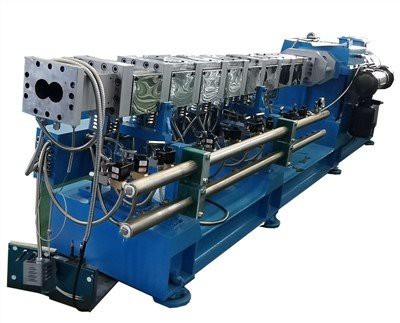
1. Low pressure loss:
If the pressure loss setting is too high, the screw may not rotate enough to maintain a sufficient continuous outward pressure on the molten droplets to counteract the impact of pressure loss. In this case, the screw is likely to twist in one direction without retracting, which will do more work on the molten droplets and significantly increase their temperature, negatively affecting their productivity and cycle time.
2. Even if the screw is worn:
The same is true for the feed section. When silicone rubber decomposes in the narrowing section of the screw at high temperature, cell migration occurs towards the centerline of the extruder. When the screw rotates, the waste material meets the tensile strength and falls off the extruder wall and is transported to the side. If the screw and the extruder have worn areas, the screw cannot effectively transport the waste material.
3. High temperatures in the extruder during the latter part of the process can result in thin films that are too thin: In the post-feed section, the waste material is transformed into a thin layer of molten polymer during the heat treatment process. The molten film layer adheres to the extruder.
4. When processing hygroscopic materials: Incorrect waste material drying will significantly reduce the viscosity of the material in the extruder and convert it into water vapor, making it difficult for the twin-screw to continuously convey the waste material.
5. Improper hopper design: Proper hopper design is key to ensuring stable material feeding. In general, uniformly sized new granules run well in square hoppers with abruptly narrowed sections. However, this is not the case when recycled waste is added. The shape and size of the recycled granules are very uneven, which affects the uniformity of the feeding. Uniform feeding is essential for the twin-screw to maintain a uniform external pressure on the melting droplets and prevent disengagement.
6. The reverse ring malfunctions: When the screw is twisted and used to plasticize waste material, the reverse ring should be in the forward position, in contact with the fixed ring seat. If the reverse ring is in the backward or intermediate position between the forward and backward positions, there will be resistance when the molten polymer passes through the gap between the reverse ring and the ring seat. If it is suspected that the reverse ring is faulty, it should be replaced immediately.


